


What causes each GLP-1 side effect?
Almost every commonly reported GLP-1 side effect traces to one of three things. The medicine slows gastric emptying and gut motility; appetite falls so total food intake drops; or weight comes off faster than the body's supply of protein and micronutrients keeps pace. Nausea, reflux, constipation and sulphur burps sit in the first group; fatigue, hair shedding, muscle loss and a hollower-looking face in the other two.
If you are a few weeks in and quietly checking whether what you feel is normal, a forum only tells you what happened to somebody else. The mechanism tells you whether food has anything to do with it, and for most of this list it does.
Every commonly reported effect is indexed below by symptom, with what is physically happening and the food-side response where one exists. A companion piece covers the same ground organised by cause instead: what causes each GLP-1 side effect, mechanism by mechanism.
Everything on this page is general information, not medical advice. Decisions about any medication belong with your doctor.
Why do side effects happen at all?
Three drivers sit underneath the whole list, and only one is pharmacology.
- The gut slows down. A GLP-1 medicine slows gastric emptying and gut motility, so food stays in the stomach longer and moves through the bowel more slowly. Fullness, comfort and regularity change with it.
- Intake falls sharply. In controlled testing, daily food intake fell by roughly a quarter, and by about a third at lunch, against placebo (Blundell et al, Diabetes, Obesity and Metabolism, 2017). Nearly every nutritional consequence below follows from that number.
- Weight comes off quickly. Rapid weight loss, reduced eating and medically induced weight loss all change body composition and thin the supply of protein, iron, zinc and B-group vitamins muscle, hair and skin draw on.
Only the first is medicine; the other two are nutrition, which is why the food answers here are worth your time. For the class basics, learn more about what a GLP-1 actually is.
The symptom index
Around 500,000 Australians regularly use GLP-1 medicines, a figure the researchers call a likely undercount (UNSW, British Journal of Clinical Pharmacology, 2026). Find your symptom in the left column; the section named after it carries the detail. The receptor-level view sits in how a GLP-1 agonist works.
| Symptom | What is happening | The nutrition response |
|---|---|---|
| Nausea | Food leaves the stomach slowly, so less volume feels full for longer | Smaller, more frequent, lower-fat, cooler meals; fluids between meals |
| Reflux or heartburn | Slower emptying makes stomach contents likelier to press upwards | Smaller portions, upright after eating, less fatty food late |
| Constipation | Slower motility, plus less food volume, dietary fibre and fluid | Dietary fibre across the day, water with it, daily movement |
| Diarrhoea | Transit speeds up, or a meal carries more fat or sugar than a slowed gut handles | Plainer, lower-fat meals; fluids and salts replaced |
| Sulphur burps | Sulphur-rich food ferments in a slow-emptying stomach, releasing hydrogen sulphide | Smaller serves of eggs, red meat, garlic, onion, cruciferous vegetables |
| Bloating and early fullness | A stomach holding food longer hits its limit on less | Small frequent meals; big raw salads when appetite is strongest |
| Food aversion | Appetite and taste shift together, so old favourites stop appealing | Start from what is tolerated; protein and vegetables in first |
| Taste changes | Taste perception shifts with appetite, sometimes towards metallic | Cold or tart foods, herbs and citrus, non-metal cutlery |
| Fatigue | Fewer calories, and iron, magnesium and B vitamins ride on food volume | Protein every meal, iron-rich foods with vitamin C, no skipped meals |
| Dehydration | Thirst cues fall with appetite, and food itself carries water | A fluid routine, not thirst; salts after vomiting or diarrhoea |
| Muscle loss | A share of any weight lost is lean mass, and low protein widens it | Protein every meal, plus resistance training two or three times weekly |
| Hair shedding | Shedding follows a stress on the system by two to three months | Enough protein and total calories, iron and zinc from food, and time |
| Gaunt or aged facial appearance | Facial fat goes with the rest, and skin does not always retract as fast | Rate of loss is a doctor conversation; protein and vitamin C under it |
Gut symptoms: nausea, reflux, constipation, diarrhoea and sulphur burps
Nausea, reflux and bloating
These three share a mechanism. Slowed gastric emptying means a meal occupies the stomach for longer, so fullness arrives earlier, lingers, and is more likely to press upwards. Volume and fat content are the two levers food gives you: both extend how long the stomach takes to clear.
Smaller eating occasions more often, cooler foods (less aroma, which matters when smell drives the nausea), and drinking between meals rather than with them is the practical version.
Constipation and diarrhoea
Constipation is the more commonly reported of the two, and it has a nutritional half you can act on. Motility slows while much less food is going in, so less dietary fibre and less fluid reach a bowel already moving slowly. Dietary fibre contributes to regular laxation, which is why the shortfall matters.
One 2025 study found people using GLP-1 medicines averaging 14.5g of dietary fibre a day against the 28g recommendation used in the research, and a second found not one participant meeting it (Frontiers in Nutrition, 2025). That is arithmetic, not willpower.
Diarrhoea is reported less often and usually follows a specific meal, most often one high in fat or sugar. Replace fluids and salts, keep meals plainer for a day or two, note the trigger. Dietary fibre on a GLP-1 works through the target, and the short version sits in the GLP-1 digestion FAQ.
Sulphur burps
Burps with a rotten-egg smell come from hydrogen sulphide, a gas produced when bacteria break down sulphur-containing foods. A stomach emptying slowly gives that process more time, which is why the smell tends to appear on a medicine that slows gastric emptying and not before.
Eggs, red meat, garlic, onion, cruciferous vegetables and some dairy are the usual suspects. Nobody needs to cut them out: smaller serves spread across the day is the change most people find works. Gut composition itself is a live research area, covered honestly in GLP-1 and probiotics.
Appetite, taste and food aversion
Appetite does not simply shrink, it changes shape. Reliable favourites can become unappealing, taste can pick up a metallic edge, and the mental chatter about food often quietens at the same time.
The risk is which foods get dropped. When the window is small, vegetables and legumes go first, and the Australian baseline was already weak: fewer than 1 in 20 adults eat the recommended serves of vegetables (ABS, 2023).
Work forward from what you can tolerate rather than backwards from what you used to eat, protein and vegetables in first. See what happens to food noise and what to eat when appetite is small.
Fatigue, dehydration and sleep
Fatigue is one of the most commonly reported non-gut effects, and it usually has several causes at once. Fewer calories arrive, so there is less fuel, and iron, magnesium and B-group vitamins travel on food volume, so intake falls with the size of the plate.
Dehydration compounds it quietly. Thirst cues drop away with appetite, and food itself supplies water a smaller plate no longer delivers, so total fluid intake falls before you change a drink. Vomiting or diarrhoea widens the gap, and salts need replacing alongside water.
In small trials of older adults with insomnia, magnesium was associated with falling asleep around 17 minutes faster (Mah and Pitre, 2021; Abbasi et al, 2012), and magnesium contributes to a reduction of tiredness and fatigue. Which micronutrients thin out first is set out in the vitamins that fall away when you eat less.
Where this goes next: the full nutrition framework for this stage sits on the GLP-1 side-effect support page.
Muscle loss and body composition
This is the effect with the hardest numbers attached. In the body-composition sub-study of the STEP 1 trial, roughly 40% of the weight lost was lean mass (Wilding et al, New England Journal of Medicine, 2021); in SURMOUNT-1 the figure was closer to 25% (Look et al, 2025).
Lean mass is not all muscle, and neither trial was built to test whether diet changed the split. What is well established is that protein intake and resistance training are the two variables under your control, and both matter more, not less, when total intake is falling. Protein targets when appetite is suppressed works through how to spread it across a day without room for three full meals.
Hair shedding and facial appearance
Hair shedding after significant weight loss is usually telogen effluvium: a large share of follicles shifting into their resting phase at once, then releasing together. Timing is the giveaway. It typically shows up two to three months after the trigger, and crash dieting and low protein intake are both recognised triggers (StatPearls).
That delay is why the shedding feels inexplicable when it starts, and why the useful response is protein and calorie adequacy in the weeks before it. Telogen effluvium and what actually drives it covers the cycle properly.
Facial change works differently: fat is lost from the face along with everywhere else, and skin does not always retract at the same rate. The rate of loss is a conversation for your doctor. On the nutrition side, protein contributes to the maintenance of muscle mass, and vitamin C contributes to normal collagen formation for the normal function of skin, so overall dietary adequacy is the foundation, not any single ingredient.
What is worth a call to your doctor
Persistent vomiting, severe or unrelenting abdominal pain, being unable to keep fluids down, signs of dehydration such as dizziness or very dark urine, and any symptom getting worse rather than settling all belong with your doctor promptly. So does anything you are unsure about, because only your doctor sees the whole picture. Never adjust a prescribed medication on the strength of something you read online.
Why eating less changes your nutrition
Intake falling by roughly a quarter does not create a nutrition problem out of nothing; it compresses one that already existed, because over 90% of Australian adults do not meet dietary guidelines (AIHW) at full appetite. The same requirements then have to travel in fewer bites.
We back a food-first approach, and everything above is food first. The statistics say it was not covering most Australians before appetite entered the picture, which is the argument for nutritional insurance underneath the food, never in place of it. The nutrition gaps that open when intake drops is the fuller version.
Where nutrition support fits
This section sits apart from everything above because it is about nutrition, not symptoms. When the volume of food shrinks, protein, dietary fibre and micronutrients still have to fit inside a smaller total. That is the job a Formulated Supplementary Food is designed for.
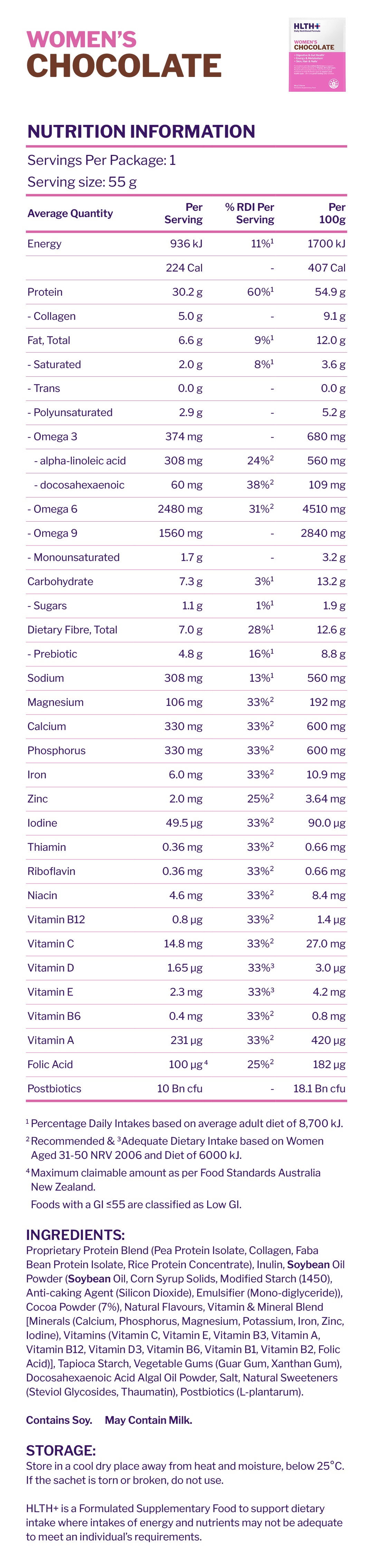
HLTH+ is an Australian-owned and made Formulated Supplementary Food under the FSANZ Food Standards Code, made in facilities complying with Good Manufacturing Practice. It supports your nutrition while you are eating less; it does not act on any symptom described on this page. Each serve carries:
- 30g protein, and protein contributes to the maintenance of muscle mass
- 7g dietary fibre, and dietary fibre contributes to regular laxation
- a balanced multivitamin profile
- 5g collagen
- 10 billion CFU Lactobacillus Plantarum Postbiotic
- 60mg DHA
That is 30 essential daily nutrients in a 55g sachet, dietitian-formulated by life stage (Women's, Women's 50+, Men's and Men's 50+) against the Nutrient Reference Values published by the National Health and Medical Research Council, the Australian Government Department of Health and Ageing and the New Zealand Ministry of Health, rather than a single one-size-fits-all label reference.
RRP $6.00, or $5.10 a day on the 28-serve subscription at $142.80 and $5.40 a day on the 14-serve at $75.60. Pause, skip or cancel at any time. Sold at hlthplus.com, and online through Amazon AU and Chemist Warehouse.
Next step: the ✦ Find My Formula quiz takes 30 seconds and shows what your current supplement stack is not giving you.
Frequently Asked Questions
What are the most common side effects on a GLP-1 medicine?
Gut symptoms dominate: nausea, reflux, constipation, diarrhoea, bloating and sulphur burps. Fatigue, hair shedding, muscle loss, food aversion, taste changes, dehydration and a hollower-looking face are reported too, and those track the drop in intake more than the medicine. Anything persistent belongs with your doctor.
How long do GLP-1 side effects last?
Patterns differ between people, so nobody can answer that from the outside. Gut symptoms are commonly most noticeable after starting or after a dose change, and many people find they settle. Anything that persists, worsens or worries you is a conversation with your doctor, not a waiting game.
Can what you eat change how you feel on a GLP-1?
For part of the list, yes. Dietary fibre, fluid, protein and total calories are within your control, and they drive regularity, energy availability and how much lean mass weight loss costs. For the pharmacological half, food changes the experience at the edges rather than the mechanism.
Which side effects mean you should call your doctor?
Persistent vomiting, severe or unrelenting abdominal pain, being unable to keep fluids down, signs of dehydration such as dizziness or very dark urine, and any symptom worsening rather than settling. Call if you are unsure, too. Never adjust a prescribed medication on the strength of an article.
Does eating less create nutritional gaps?
It narrows the margin. Intake falling by roughly a quarter (Blundell et al, 2017) lands on a baseline where over 90% of Australian adults already do not meet dietary guidelines (AIHW). The same requirements then have to travel in fewer bites, an arithmetic problem rather than a willpower one.
This article is general information, not medical advice. Decisions about any medication belong with your doctor.
Leave a comment
This site is protected by hCaptcha and the hCaptcha Privacy Policy and Terms of Service apply.