

Five gaps, one cause
In controlled testing, GLP-1 medication cut free-choice food intake by roughly a quarter across the day, and about 35% at lunch (Blundell et al, 2017). Nutrient needs do not shrink to match. That mismatch opens five predictable gaps: protein, dietary fibre, micronutrients, DHA and calcium.
The pattern is not random. The nutrients that fall first are the ones that arrive on the biggest items on the plate, and the biggest items are what a reduced appetite cuts first.
This article takes the five gaps one at a time: why each one opens, and the food-first fix for each. None of it is an argument for or against the medicines; it is about feeding a smaller appetite properly, while the medical decisions stay with your doctor.
General information, not medical advice. Decisions about GLP-1 medicines belong with your doctor.
Gap one: protein
Protein contributes to the maintenance and growth of muscle mass and to tissue repair, which makes it the worst nutrient to lose first. It is also the most exposed, because protein usually arrives as the biggest thing on the plate. A steak you cannot finish is protein you did not eat.
The fix is sequencing. Eat the protein on the plate first, before lighter foods fill the space a smaller appetite allows. Eggs, Greek yoghurt, tinned tuna, chicken, tofu and legumes all deliver protein in small, manageable serves, so even a shrunken meal can anchor on it.
Aim for a protein anchor at every meal rather than one big protein dinner. Small serves spread across the day survive a reduced appetite far better than a single large one that arrives when you are least hungry.
Breakfast deserves particular attention here, because it is usually the weakest protein meal of the day and often the one a reduced appetite handles best. Moving protein into it, through yoghurt, eggs or leftover chicken, is the cheapest win on this whole list.
Gap two: dietary fibre
This is the best-measured gap of the five. A 2025 study found GLP-1 users averaging 14.5g of dietary fibre a day against the 28g recommendation (Frontiers in Nutrition, 2025). In one study, not a single user met the target.
The timing makes it worse. A GLP-1 medicine slows gastric emptying and gut motility, which commonly changes bowel regularity, and smaller meals carry less incidental fibre at exactly that point. Dietary fibre contributes to regular laxation, so this gap is worth closing deliberately rather than by accident.
Food first: vegetables at two meals a day, oats or wholegrains at breakfast, legumes wherever they fit. The full arithmetic of the shortfall, and the foods that close it, is covered in Dietary Fibre on a GLP-1: The 14.5g Problem.
Gap three: micronutrients
Most Australians started this behind. Over 90% of Australian adults do not meet dietary guidelines (AIHW), and fewer than 1 in 20 eat the recommended serves of vegetables (ABS). Eating a quarter less does not create a micronutrient problem so much as compound one that already existed.
A smaller appetite also means fewer eating occasions to put it right. Every serve has to carry more: colourful vegetables, eggs, dairy and seafood ahead of beige fillers that spend appetite without returning much nutrition.
The supermarket test is colour and variety, not label promises. A basket with greens, orange vegetables, eggs and tinned fish covers more micronutrient ground than any single hero food.
Where the individual vitamins and minerals slip when intake drops, and which ones deserve attention first, is covered in GLP-1 and Vitamins: Where Micronutrients Slip.
Gap four: DHA
DHA is an omega-3 fat the body cannot make in meaningful amounts, so the diet has to supply it, mainly through oily fish and seafood. That supply line has a structural weakness: fish is usually eaten as a whole-plate meal. Whole-plate meals are exactly what a small appetite crowds out first.
Nobody snacks their way to salmon. When the fish dinners go, DHA goes with them, and nothing about a smaller plate announces which fats it dropped.
The fix is format, not willpower. Keep seafood in the week in small shapes: tinned salmon or sardines on wholegrain crackers, smoked fish stirred through scrambled eggs, a half serve rather than none.
Gap five: calcium
Calcium contributes to normal teeth and bones and to normal nerve and muscle function. In the Australian diet it rides mostly on dairy: milk in coffee, yoghurt, cheese, and the dairy attached to full-sized meals. When meals shrink, the attached dairy shrinks with them, largely unnoticed.
The counter is to make calcium a snack rather than a by-product of big meals. Yoghurt and cheese are dense small serves, and calcium-fortified milks upgrade the coffee you were having anyway. Tinned fish eaten with the bones works on this gap and the DHA one from the same tin.
The shape all five gaps share
Read back across the list and the geometry repeats. Protein rides on the meat serve, fibre on the vegetable-heavy dinner, DHA on the fish fillet, calcium on the dairy attached to a full plate, and micronutrients on all of them at once. Appetite shrinks the big items first, so these nutrients fall fastest.
That is why the fix has the same shape every time: smaller, denser, more deliberate. Protein first, dietary fibre on purpose, seafood and dairy reformatted into serves a reduced appetite can actually finish.
A practical way to run it is to plan each plate in order: protein first, then vegetables or wholegrains for the fibre, then whatever else appetite allows. On a small plate, order is the difference between a covered day and a gap.
Where HLTH+ fits
We believe in a food-first approach. The statistics above say it was not fully working even before appetites shrank, which is where a Formulated Supplementary Food under the FSANZ Food Standards Code earns its place: not replacing food, supplementing it.
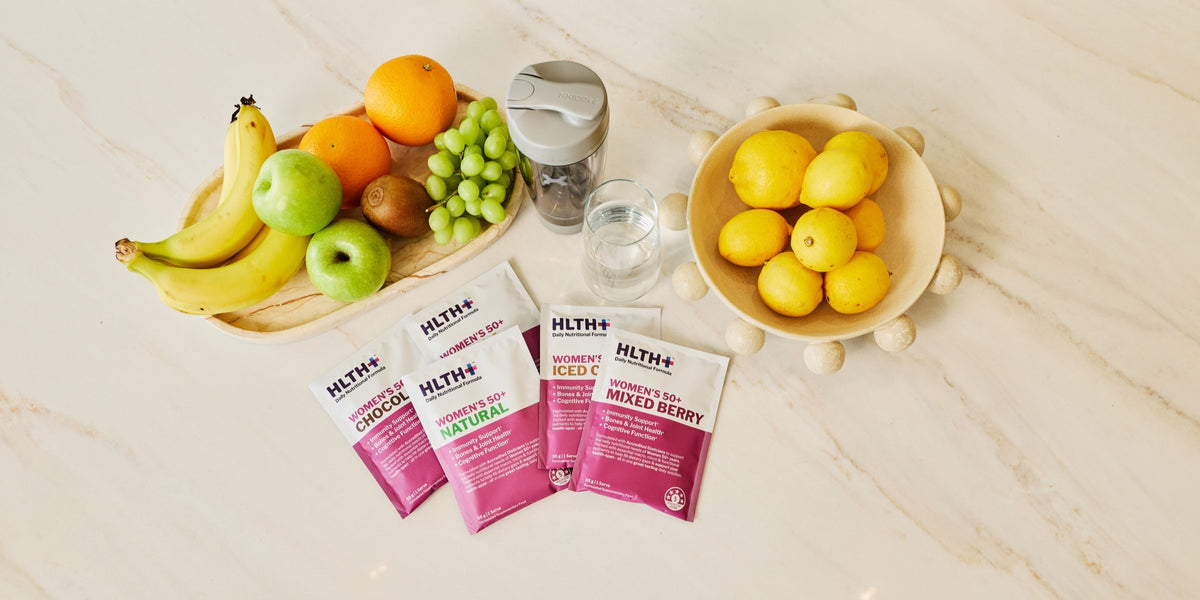
HLTH+ is an Australian-owned and made Formulated Supplementary Food. It does not raise GLP-1, does not cause weight loss, and makes no claim to; its job is the nutrition side of a smaller diet. Each serve supplies 30 essential daily nutrients. The label reads: 30g protein, 7g dietary fibre, 60mg DHA, 5g collagen and 10 billion CFU Lactobacillus Plantarum Postbiotic plus prebiotics, alongside a balanced multivitamin profile, at RRP $6.00.
Rather than one generic formula, it is dietitian-formulated to the Nutrient Reference Values set by the National Health and Medical Research Council, the Australian Government Department of Health and Ageing and the New Zealand Ministry of Health, in life-stage versions: Women's, Women's 50+, Men's and Men's 50+.
Not sure which gaps are yours? The ✦ Find My Formula quiz takes 30 seconds and shows what your current stack is missing. For the fuller picture on feeding a reduced appetite, learn more at the GLP-1 nutrition support page.
Frequently Asked Questions
Which nutrients drop first when you eat less?
Protein, dietary fibre, micronutrients, DHA and calcium. Protein and fibre fall because they ride on the biggest foods on the plate: meat serves, vegetables and wholegrains. The fibre gap is measured: GLP-1 users in a 2025 study averaged 14.5g a day against the 28g recommendation. DHA and calcium slip because fish and dairy meals shrink early.
Why does DHA matter?
DHA is an omega-3 fat the body cannot make in meaningful amounts, so it has to come from food, mainly oily fish and seafood. Fish is usually eaten as a whole-plate meal, which is the first thing a small appetite drops, so DHA intake tends to fall early when someone eats less.
How do you close the gaps on a small appetite?
Sequence protein first at every meal, build dietary fibre deliberately from vegetables, wholegrains and legumes, and keep seafood and dairy in the week in smaller formats. Where food alone will not stretch, a Formulated Supplementary Food can supplement the diet: HLTH+ provides 30g protein per serve, 7g dietary fibre and 30 essential daily nutrients.
This article is general information, not medical advice. Decisions about GLP-1 medicines belong with your doctor.
Leave a comment
This site is protected by hCaptcha and the hCaptcha Privacy Policy and Terms of Service apply.