

The arithmetic: 14.5g against 28g
The 14.5g problem is a measured gap, not a guess. A 2025 study in Frontiers in Nutrition found GLP-1 users averaging 14.5g of dietary fibre a day against the 28g recommendation: roughly half the target, and a 13.5g daily shortfall. In a second 2025 study, not a single user met the recommendation.
Most nutrition problems are fuzzy. This one is arithmetic: a gap you can count in grams, opening on an appetite that fills quickly. The rest of this article walks through why the gap opens and the food-first ways to close 13.5g without needing a bigger appetite to do it.
Why fibre intake falls when appetite drops
Hardly anyone eats fibre deliberately. It arrives as a passenger in ordinary meals: the grain around the carbohydrate, the skin on the fruit, the bulk of the vegetables. When the meals shrink, the fibre shrinks with them.
And the meals do shrink. In controlled testing, GLP-1 medication cut free-choice food intake by roughly a quarter across the day, and about 35% at lunch (Blundell et al, 2017). Take a quarter out of a diet that met the 28g mark and the arithmetic alone leaves you near 21g; the measured average was lower again, at 14.5g.
The extra fall has a simple explanation. Fibre-rich foods are filling by nature, so they are the first things a small appetite pushes off the plate: toast is easier than lentils when you only have a dozen mouthfuls of room. The foods that suit a reduced appetite tend to be exactly the ones carrying the least fibre.
Timing makes the gap matter more than the raw number suggests. A GLP-1 medicine slows gastric emptying and gut motility, which commonly changes bowel regularity, and dietary fibre is the nutrient that contributes to regular laxation. So fibre intake falls at the same time the gut is running slower; short answers on that side of the story live in the GLP-1 digestion FAQ.
Fibre is not the only casualty either. It is one of five nutrition gaps that open when intake drops by a quarter, and the full set is mapped in GLP-1 nutrition: the five gaps.
General information, not medical advice. Decisions about GLP-1 medicines belong with your doctor, and a marked or persistent change in digestion is a conversation for your GP.
Closing a 13.5g gap on a small appetite
The playbook is density, not volume. On a small appetite you cannot add a salad the size of a dinner plate, so every gram of fibre has to hitch a ride on food you were going to eat anyway.
- Legumes first. Lentils, chickpeas and beans are among the densest everyday fibre sources spoonful for spoonful. Stir them through soups, mince dishes or half a wrap rather than serving them as a pile on their own.
- Swap the grain, keep the portion. Wholegrain bread over white, brown rice or barley over white rice, oats over a low-fibre cereal. The volume on the plate stays the same while the fibre in it rises.
- Keep skins on. Fruit and vegetables carry a meaningful share of their fibre in and near the skin. Whole fruit beats juice every time.
- Sprinkle seeds. Chia, linseed and other seeds fold into yoghurt, oats or a shake without adding real volume, which is the whole game on a reduced appetite.
- Vegetables in everything. Grate or dice them into dishes you already manage well rather than plating them separately. Fewer than 1 in 20 Australian adults eat the recommended vegetable serves (ABS, 2023), so this habit was worth building before any medication entered the picture.
In practice a gap-closing day looks unremarkable, which is the point. Oats with seeds in the morning, a soup with lentils stirred through at lunch, vegetables diced into whatever dinner already is, and whole fruit as the snack between them. Nothing on that list demands a large appetite; each item simply makes the mouthfuls you do have carry more.
You do not need a tracking app to know whether it is working. Count habits instead of grams: how many meals this week carried a legume, a wholegrain or a skin-on vegetable that the old version of the meal did not. Breakfast is usually the easiest place to start, because it is the meal people repeat daily and the one where oats, seeds and fruit slot in with no recipe change at all.
Two tactics make the grams land more comfortably. Spread fibre across the day rather than loading one large hit, and step the increase up gradually over a couple of weeks with fluids alongside, because a slower gut handles a steady supply better than a sudden jump.
For the shopping-trip version, the Australian GLP-1 food list organises all of this by food group, and what to eat on a GLP-1 covers which foods earn their place on a small plate first.
Where a Formulated Supplementary Food fits
We believe in a food-first approach, and everything above is food first. The statistics say it is not fully working on its own, though: over 90% of Australian adults do not meet dietary guidelines (AIHW), before any appetite reduction is added on top. That is the case for nutritional insurance sitting underneath the food-first playbook, not in place of it.
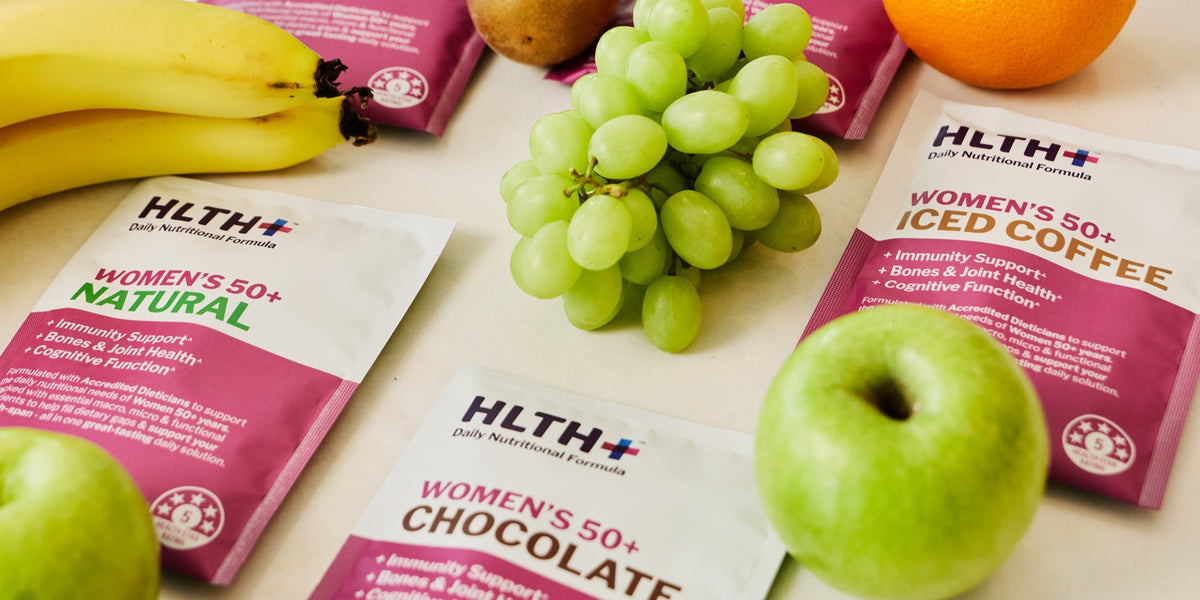
HLTH+ is an Australian-owned and made Formulated Supplementary Food under the FSANZ Food Standards Code, built to supplement a diet while someone is eating less. Each serve carries 7g dietary fibre, and dietary fibre contributes to regular laxation, alongside 30g protein and 30 essential daily nutrients. It is dietitian-formulated to the Nutrient Reference Values set by the National Health and Medical Research Council, the Australian Government Department of Health and Ageing and the New Zealand Ministry of Health, in life-stage versions (Women's, Women's 50+, Men's, Men's 50+) at RRP $6.00.
That 7g is not presented as the whole answer. Against a 13.5g gap it is a meaningful share of the arithmetic, with the food habits above doing the rest.
Next step: the ✦ Find My Formula quiz takes 30 seconds and shows what your current stack is missing. To go deeper on feeding a smaller appetite, learn more about nutrition support when intake drops.
Frequently Asked Questions
How much fibre do you need per day?
The benchmark used in the 2025 Frontiers in Nutrition review of GLP-1 users was 28g a day, and the users studied averaged 14.5g, roughly half of it. Exact targets vary by age and gender, but on a reduced appetite the practical question is not the precise target, it is how far below it you are running.
Why does fibre intake fall on a GLP-1?
Because fibre arrives as part of ordinary meals, and the medicines reduce how much you eat: controlled testing measured food intake falling by roughly a quarter across the day. Filling, fibre-rich foods are also the first things a small appetite drops, so fibre intake tends to fall faster than food intake does.
What are high-fibre foods that suit small serves?
Legumes such as lentils, chickpeas and beans give the most fibre per spoonful, followed by seeds, wholegrains, vegetables with skins on, and whole fruit. Fold them into food you already eat rather than adding new dishes, spread them across the day, and increase gradually with fluids alongside.
This article is general information, not medical advice. Decisions about GLP-1 medicines belong with your doctor.
Leave a comment
This site is protected by hCaptcha and the hCaptcha Privacy Policy and Terms of Service apply.