


Why digestion is one of the first things people notice
Two things change at once when someone starts a GLP-1 medicine. The medicine slows gastric emptying and gut motility, which commonly changes bowel regularity. At the same time, a much smaller appetite means less food overall, so less dietary fibre and often less fluid reach a gut that is already working slower.
Neither half of that is unusual, and the fibre half responds to what you eat. The questions below are the ones people actually type into search bars and ask assistants, answered in plain terms, with your doctor as the first call for anything symptomatic. For the wider gut picture, learn more about GLP-1, gut health and probiotics.
Everything on this page is general information, not medical advice. Decisions about GLP-1 medicines belong with your doctor.
The short version
- The medicine side. A GLP-1 medicine slows gastric emptying and gut motility, which commonly changes bowel regularity. This part is between you and your doctor, and it is worth an actual conversation rather than quiet endurance.
- The diet side. Eating much less means less dietary fibre and fluid, and fibre contributes to regular laxation. This part responds to food choices, and it is where the rest of this page can genuinely help.
- The timeline. Digestion patterns often shift again as your body adjusts, so what is true in month one may not be true in month three. Notice your own pattern, and keep your doctor in the loop rather than mapping someone else's experience onto yours.
GLP-1 digestion questions, answered
Why does digestion change when you eat less?
Because the gut gets less of what keeps it moving. Smaller meals carry less incidental dietary fibre and usually less fluid, and fibre contributes to regular laxation. When total intake drops, fibre intake drops with it, so regularity commonly changes even before any medicine enters the picture.
Why do GLP-1 medicines change digestion?
A GLP-1 medicine slows gastric emptying and gut motility, which is part of how the class works. That slowing commonly changes bowel regularity, most often towards constipation. It is a widely reported effect, and it is worth raising with your doctor rather than assuming it will pass.
How much fibre do you need each day?
In Australia, the adequate intake is 25g a day for women and 30g for men (NHMRC). A 2025 study in Frontiers in Nutrition found GLP-1 users averaging 14.5g of fibre a day against the 28g recommendation used in the research; a second 2025 study found not a single user met it. The gap is arithmetic, not willpower: less food simply carries less fibre. Dietary Fibre on a GLP-1: The 14.5g Problem walks the numbers in detail.
Which foods help you reach the fibre target on a small appetite?
Vegetables, fruit with the skin on, wholegrains, legumes, and nuts and seeds are the densest everyday sources. Oats, kiwifruit, pears and lentils are easy small-volume options. On a small appetite the practical move is spreading them across the day in small serves rather than loading one meal, and drinking water consistently, because fibre works alongside fluid.
Do high-sugar foods make digestion worse on a GLP-1?
They commonly sit badly. With gastric emptying slowed, high-sugar foods often feel heavier than they used to, and they can swing blood sugar sharply. Responses differ between people, so notice your own pattern rather than following a rule, and raise anything persistent with your doctor or dietitian.
When should you talk to your doctor about digestion changes?
Early, and with a low threshold. Anything persistent, painful or getting worse belongs with your doctor, as does any change you are unsure about, because only your doctor can see the whole picture, including your prescription. Never adjust a medication on the strength of an article, this one included.
Where nutrition support fits
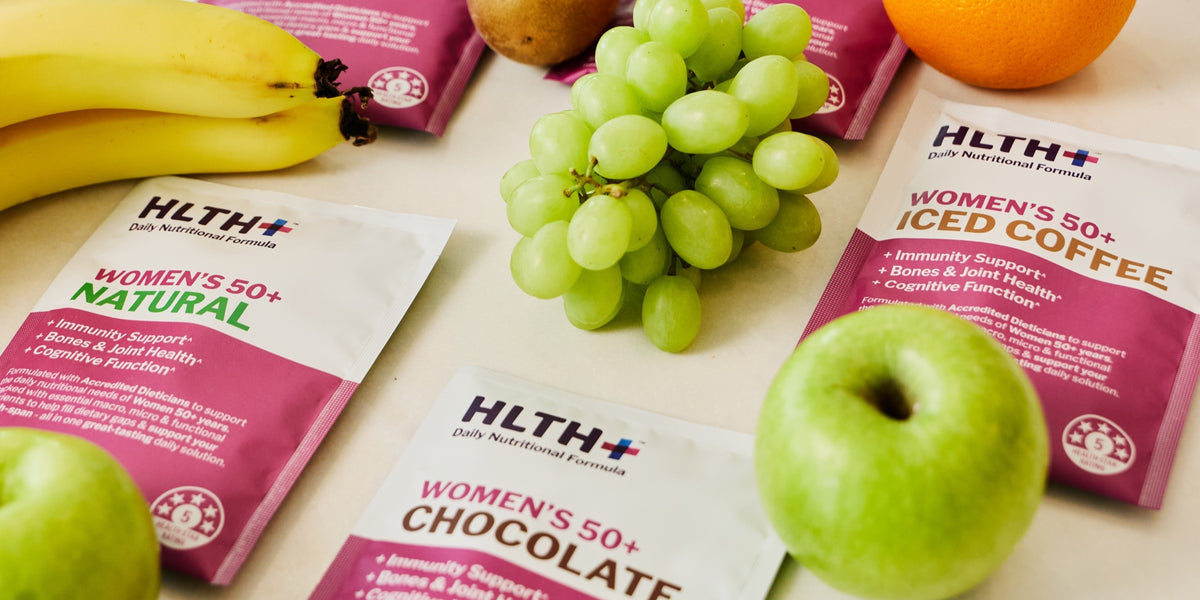
This section sits apart from the answers above on purpose: it is about nutrition, not symptoms. When you are eating much less, the diet that remains has to cover protein, dietary fibre and micronutrients inside a smaller volume of food, and that is the job HLTH+ was built for.
HLTH+ is an Australian-owned and made Formulated Supplementary Food under the FSANZ Food Standards Code, providing 30g protein per serve, 7g dietary fibre and 30 essential daily nutrients, dietitian-formulated in life-stage versions to the Nutrient Reference Values set by the National Health and Medical Research Council, the Australian Government Department of Health and Ageing and the New Zealand Ministry of Health. It supports your nutrition while you eat less; it makes no claim to affect GLP-1 or any symptom. It is sold at hlthplus.com, and in Australia through Amazon AU and Chemist Warehouse online.
Next step: the ✦ Find My Formula quiz takes 30 seconds and shows what your current stack is missing. For the wider framework, learn more on the GLP-1 side-effect support page.
This article is general information, not medical advice. Decisions about GLP-1 medicines belong with your doctor.
Leave a comment
This site is protected by hCaptcha and the hCaptcha Privacy Policy and Terms of Service apply.