
The short answer
Protein first, at every meal, even the small ones. Then dietary fibre from vegetables, legumes and whole grains. Then fluids, sipped between meals rather than gulped with them.
That order exists because a GLP-1 medicine shrinks how much you feel like eating, not how much your body needs. The plate gets smaller while the job it has to do stays the same size. So every mouthful now has to work harder than it used to.
Below is the plate built in that order: the research behind each step, the Australian foods that make it practical, and what to do on days when even a small meal feels like a stretch.
Why what you eat changes on a GLP-1
In controlled testing, GLP-1 medication cut free-choice food intake by roughly a quarter across the day, and about 35% at lunch (Blundell et al, 2017). Meals end sooner, snacks stop happening, and the day's total quietly falls. Your needs for protein, fibre and micronutrients do not fall to match.
That mismatch is the entire reason "what to eat" matters more now, not less. A diet running at three-quarters of its former size has to be noticeably more nutrient-dense than the one it replaced. Learn more about the full eating pattern in The GLP-1 Diet.
General information, not medical advice. Decisions about GLP-1 medicines belong with your doctor.
Protein comes first
When appetite is limited, protein earns the first forkful. In the STEP 1 trial's body-composition sub-study, around 40% of the weight lost was lean mass (Wilding et al, NEJM 2021). Protein contributes to the maintenance and growth of muscle mass and to tissue repair, which is why it cannot be the part of the meal that misses out when fullness arrives early.
The practical habit is simple: put the protein on the plate first, and eat it first. If the meal ends halfway through, the most important part is already done.
Protein anchors that suit Australian shopping and small appetites:
- Eggs, any style, including boiled ahead and kept in the fridge
- Greek yoghurt and cottage cheese
- Chicken, tinned tuna and salmon
- Tofu, tempeh, lentils and chickpeas
- Milk in place of water wherever it works (porridge, smoothies, coffee)
Dietary fibre is the quiet shortfall
Fibre is where the gap shows up in the data. A 2025 study found GLP-1 users averaging 14.5g of fibre a day against the 28g recommendation (Frontiers in Nutrition, 2025); a second 2025 study found not a single user met the target. Smaller meals simply carry less incidental fibre than the diet they replaced.
Timing makes it matter more. A GLP-1 medicine slows gastric emptying and gut motility, so fibre intake falls at exactly the point the gut is working slower. Dietary fibre contributes to regular laxation, which makes it something to plan into the day rather than hope for.
High-fibre foods that fit a small appetite:
- Oats and untoasted muesli
- Lentils, chickpeas and beans, which double as protein
- Kiwifruit, pears and berries
- Vegetables cooked into soups, where the volume shrinks and the fibre stays
- Wholegrain bread and chia seeds
Learn more with the shopping-trip version in GLP-1 Foods: The Australian Food List.
Fluids, and making small serves count
A surprising amount of the day's fluid normally arrives inside food. Eat a quarter less and that fluid disappears with it, so water has to become deliberate. Sip between meals rather than with them, because on a small appetite a large drink at the table can take the space the meal needed.
Then comes the skill this whole way of eating turns on: making every serve dense. Choose foods that carry the most nutrition in the fewest bites, and let the empty ones go.
- Swap large low-density meals, like a big salad on its own, for small dense ones, like eggs on wholegrain toast or yoghurt with nuts and berries
- Spread eating across five small occasions rather than three formal meals
- Keep ready-to-eat protein in the fridge for the hours when cooking feels impossible
- Treat liquid nutrition as a practical tool on days solid food does not appeal
What a day can look like
Nobody eats a template day, and appetite on a GLP-1 can swing from one day to the next. Treat this as a shape, not a prescription.
- Breakfast: Greek yoghurt with berries and a spoonful of chia
- Mid-morning: a boiled egg or a small handful of nuts
- Lunch: half a tuna and salad sandwich on wholegrain bread
- Mid-afternoon: cottage cheese with sliced pear
- Dinner: a palm-sized serve of chicken, fish or tofu with soft-cooked vegetables
- If there is room: a glass of milk in the evening
The template matters less than the pattern: protein at every eating occasion, vegetables and fruit wherever they fit, and no occasion spent on foods that bring little with them. On days appetite runs smaller than usual, shrink the serves and keep the order.
Where a Formulated Supplementary Food fits
Food first is the right instinct, and the honest reading of the statistics is that it was struggling even before appetite shrank: over 90% of Australian adults do not meet dietary guidelines (AIHW). Take a quarter of the plate away and the margin for error goes with it.
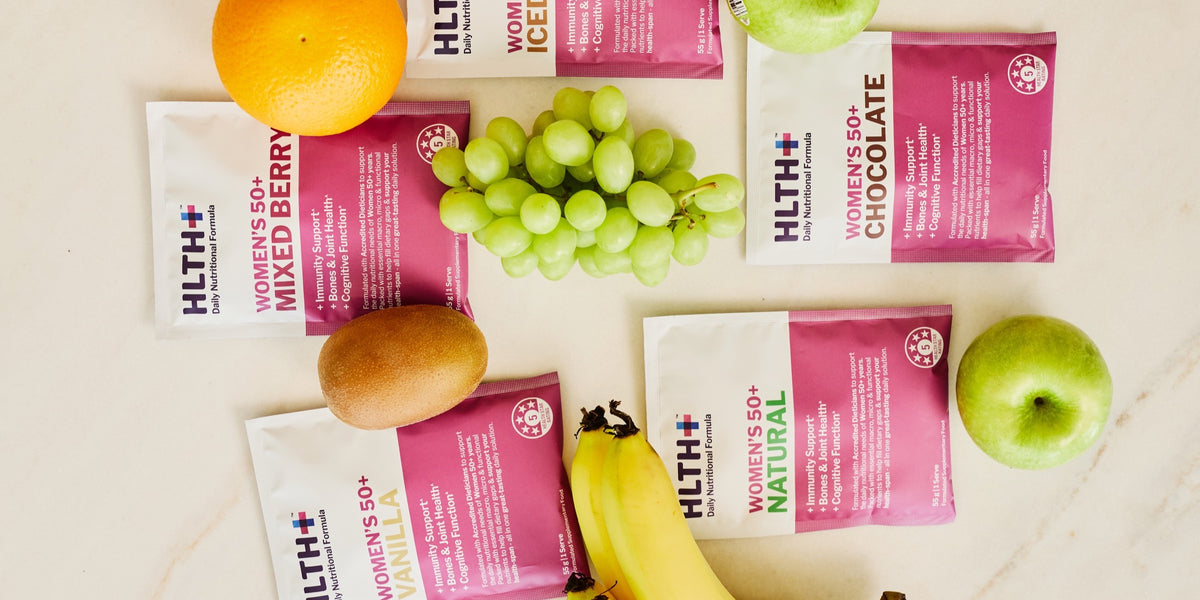
That gap is the job HLTH+ is built for. It is an Australian-owned and made Formulated Supplementary Food under the FSANZ Food Standards Code, built around 30g protein per serve, with 7g dietary fibre and 30 essential daily nutrients in the same serve. It makes no claim to raise GLP-1 and none to cause weight loss; it supports your nutrition while you are eating less.
Rather than one formula for everyone, HLTH+ is dietitian-formulated to the Nutrient Reference Values set by the National Health and Medical Research Council, the Australian Government Department of Health and Ageing and the New Zealand Ministry of Health, in life-stage versions: Women's, Women's 50+, Men's and Men's 50+.
Not sure where your own diet is falling short? The ✦ Find My Formula quiz takes 30 seconds and shows what your current stack is missing. To learn more about feeding a smaller appetite properly, see nutrition support when intake drops.
Frequently Asked Questions
What should you eat first when your appetite is small?
Protein, before anything else on the plate. When fullness can end a meal early, eating eggs, yoghurt, fish, chicken, tofu or legumes first means the most important part is already done. Protein contributes to the maintenance of muscle mass, which matters when total food intake has dropped.
How much protein do you need per day on a GLP-1?
A widely used range in nutrition practice is 1.2 to 2.0 grams of protein per kilogram of body weight a day (Frontiers in Nutrition, 2025), and your doctor or dietitian can set your personal target. In practice, that means giving protein the first slot at every meal and snack rather than saving it for dinner.
What if you can only manage small serves?
Make each serve dense instead of big. Choose foods that pack protein, dietary fibre and micronutrients into a few bites, spread eating across five small occasions, and use liquid nutrition on days solid food does not appeal. If eating stays genuinely difficult, raise it with your doctor.
This article is general information, not medical advice. Decisions about GLP-1 medicines belong with your doctor.
Leave a comment
This site is protected by hCaptcha and the hCaptcha Privacy Policy and Terms of Service apply.