
Why protein comes first when you eat less
A GLP-1 medicine changes how much you eat, not how much protein your body needs. In controlled testing, the medicines cut free-choice food intake by roughly a quarter across the day, and about 35% at lunch (Blundell et al, 2017). Your protein requirement stays where it was; the food carrying it shrinks.
That mismatch is the whole story of this article. Protein-rich foods are filling and take effort to eat, so they are often the first thing a small appetite sets aside. Yet protein contributes to the maintenance and growth of muscle mass and to tissue repair, which is exactly the work a body losing weight quickly needs done.
This page covers what the trials measured on lean mass, how much protein to aim for, and how to hit that number inside a reduced intake. Protein is also the first of the five gaps that open when appetite drops, if you want the full picture.
What the trials measured on lean mass
When weight comes off quickly, not all of it is fat. In the STEP 1 trial's body-composition sub-study, around 40% of the weight lost was lean mass (Wilding et al, NEJM 2021). In SURMOUNT-1 the figure was around 25% (Look et al, 2025).
Lean mass is not the same thing as muscle; the measure includes water and organ tissue. But muscle sits inside that number, and strength and function are what most people actually want to keep. That is why researchers track it so closely during rapid weight change.
None of this is a criticism of the medicines, and it is not a reason to change how you take one. It is a reason to take the eating side seriously: adequate protein, plus resistance exercise where you can, is the standard response while weight is falling quickly.
This section is general information, not medical advice. Decisions about GLP-1 medicines belong with your doctor.
How much protein is enough?
Protein targets are set for bodies, not medications. A commonly used working range for adults losing weight is 1.2 to 2.0g of protein per kilogram of body weight a day (Frontiers in Nutrition, 2025). For a 70kg adult, that lands between roughly 84g and 140g of protein daily.
Where you sit inside that range depends on your health, your training and your goals, so confirm your own number with your doctor or dietitian. The direction is the useful part: people eating a quarter less rarely drift toward too much protein. They drift toward too little.
If you want to check yourself, count for a single week. Work from your body weight in kilograms and the range above, read labels rather than guessing, and see where a normal day actually lands. Most people only need to count briefly, because a protein-anchored eating pattern does the job on its own once it becomes habit.
Distribution matters as much as the total. Smaller meals mean each one has to carry protein rather than leaving it all to dinner. An even spread across the day gives a reduced intake its best chance of covering the target; the wider eating pattern is covered in the GLP-1 diet.
How to hit a protein target on a small appetite
The playbook is ordering, density and repetition, and it works across rapid weight loss, reduced eating and medically induced weight loss.
- Eat the protein on the plate first. If fullness arrives early, the most important food is already in.
- Choose foods that carry protein in few bites. Eggs, Greek yoghurt, tinned tuna and salmon, chicken, tofu, lentils and milk-based drinks deliver far more protein per mouthful than toast, crackers or plain soup.
- Make snacks do protein work. A boiled egg or a small tub of yoghurt earns its place; a biscuit spends a small appetite on nothing.
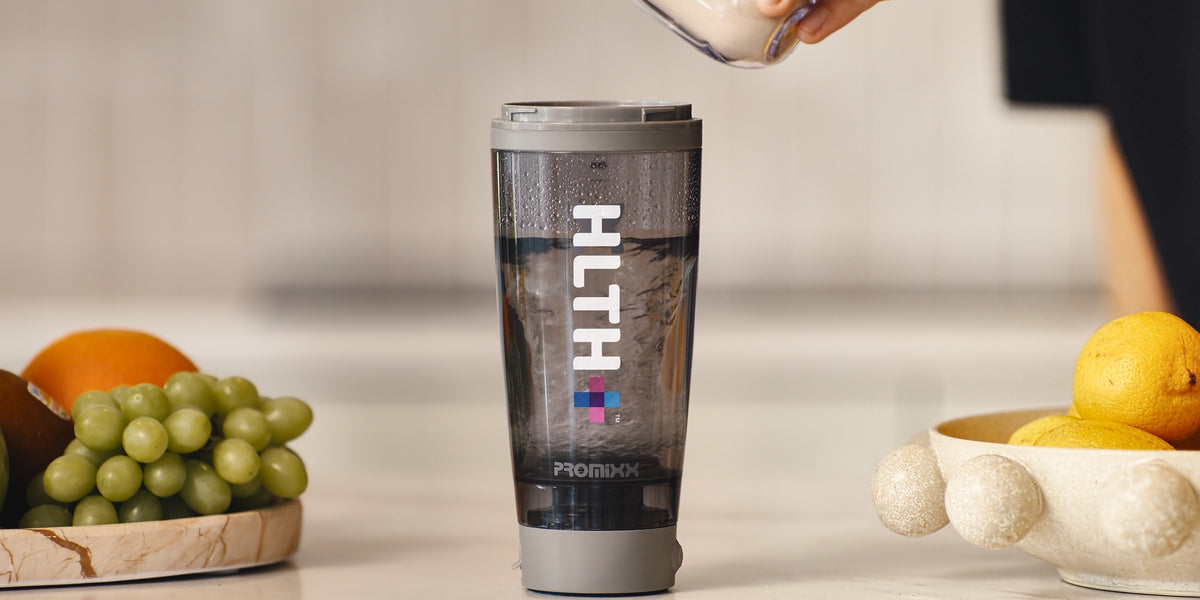
- Use liquids when solids feel like a wall. Many people find drinks easier than plates, and a protein-forward drink can carry a meaningful share of the day's target.
- Keep serves small and frequent. Several small protein anchors suit a reduced appetite better than two large meals you cannot finish.
What a protein-first day can look like
Sketched loosely: breakfast is Greek yoghurt before any toast enters the picture. Lunch opens with the tinned salmon or the chicken, and the salad follows if there is room. Dinner plates the smallest portion you would normally serve, protein at the front, and a milk-based drink or a boiled egg patches any meal that got cut short.
None of that requires counting every gram. It requires one decision made at each meal: protein goes in first, while the appetite is still there to spend.
For the rest of the plate, learn more about what to eat on a GLP-1. For the training side of the equation, the muscle pillar of the GLP-1 support hub goes deeper.
Where HLTH+ fits
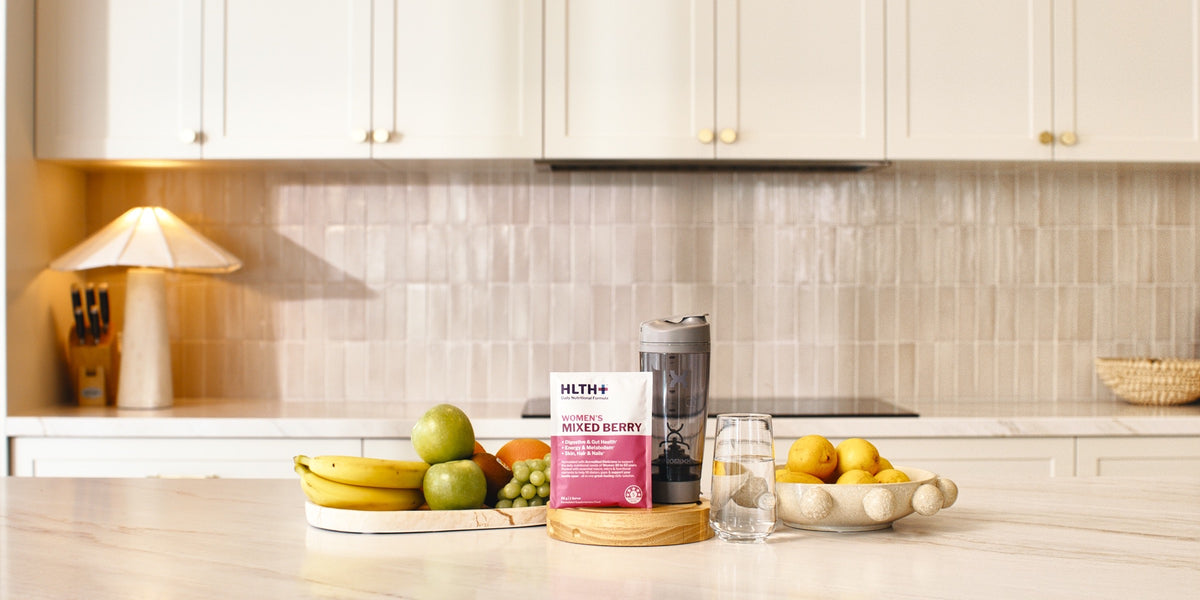
Food first is the right default, and if your meals already cover your protein target you need nothing else. Many small appetites never quite get there, which is where HLTH+ fits: an Australian-owned and made Formulated Supplementary Food under the FSANZ Food Standards Code, built to supplement the diet, not replace it. It makes no claim to raise GLP-1 and none to cause weight loss; it supports nutrition while you eat less.
Each serve supplies 30 essential daily nutrients. The label reads: 30g protein, 7g dietary fibre, 5g collagen, 10 billion CFU Lactobacillus Plantarum Postbiotic plus prebiotics, 60mg DHA and a balanced multivitamin profile. Rather than dosing to the industry's 8,700 kJ labelling reference, which sits above what the Nutrient Reference Values recommend for most adults, it is dietitian-formulated to the NRVs set by the National Health and Medical Research Council, the Australian Government Department of Health and Ageing and the New Zealand Ministry of Health, in life-stage versions (Women's, Women's 50+, Men's, Men's 50+). It comes in five flavours at RRP $6.00, sold at hlthplus.com and through Amazon AU and Chemist Warehouse online.
Next step: the ✦ Find My Formula quiz takes 30 seconds and shows what your current stack is missing.
Frequently Asked Questions
How much protein do you need on a GLP-1?
Protein needs do not fall with appetite. A commonly used working range for adults losing weight is 1.2 to 2.0g of protein per kilogram of body weight a day, spread across meals. Where you sit in that range depends on your health and goals, so confirm your number with your doctor or dietitian.
Why is lean mass a concern?
In the STEP 1 trial's body-composition sub-study, around 40% of the weight lost was lean mass; in SURMOUNT-1 it was around 25%. Lean mass includes water and organ tissue, not only muscle, but muscle sits inside the number. Adequate protein and resistance exercise are the standard response while weight falls quickly.
What are easy high-protein options for small appetites?
Pick foods that carry protein in few bites: eggs, Greek yoghurt, tinned tuna or salmon, chicken, tofu, lentils and milk-based drinks. Eat the protein portion of a meal first, make snacks protein-forward, and use drinks on days when solid food feels like too much.
Does your protein need drop when your appetite does?
No. In controlled testing, GLP-1 medicines cut daily food intake by roughly a quarter, while protein requirements stayed exactly where they were. That mismatch is the reason protein takes planning on a GLP-1: the food shrinks, the requirement does not, and the gap has to be closed deliberately.
This article is general information, not medical advice. Decisions about GLP-1 medicines belong with your doctor.
Leave a comment
This site is protected by hCaptcha and the hCaptcha Privacy Policy and Terms of Service apply.