


A headache or a dizzy spell while you are eating far less than usual has more than one possible cause, and the health services name several that sit close together: too little fluid, long gaps between meals, low blood sugar, and standing up too fast. Headache and dizziness are also listed among the side effects reported in trials of GLP-1 medications. Some headaches need urgent care, so the warning signs come before anything else on this page.
If you are mid-way through a bad day of this, the useful question is which cause fits yours and which signs mean a call to a doctor or triple zero (000). Most pages guess; this one says which source says what.
This page covers what the trials report, what Australian health services say about dehydration, missed meals and dizziness, what electrolytes are, and how a reduced intake can leave fluids and nutrients short.
When is a headache or dizzy spell an emergency?
Call triple zero (000) if dizziness comes with pain, pressure, heaviness or tightness in the chest, shoulders, neck, arms, jaw or back; nausea or cold sweats; shortness of breath; numbness or weakness in the face, arm or leg; trouble talking, understanding or swallowing; vision changes in one or both eyes; confusion; or loss of consciousness (healthdirect, Dizziness, reviewed November 2023). The UK National Health Service gives a matching list for headache: seek emergency help if it started suddenly and is extremely painful, or comes with a seizure, numbness or weakness, difficulty speaking or walking, drowsiness or confusion, loss of vision, or a very high temperature, a stiff neck or bright lights that bother you (NHS, Headaches, reviewed April 2024).
Ask for an urgent appointment if a headache comes with vision or eye problems, is made worse by coughing, sneezing, bending down or exercising, or comes with vomiting (NHS, same page). Better Health Channel adds that persistent headache should always be investigated by a doctor (Better Health Channel, Headache).
This article is general information, not medical advice. Decisions about any medication belong with your doctor.
Is headache a side effect of GLP-1 medications?
GLP-1 medications are prescription drugs that target the receptor of glucagon-like peptide-1, a hormone made in the gut that delays stomach emptying and lowers the wish to eat, so a smaller appetite is expected. Four US professional societies issued a 2025 joint advisory whose table lists common side effects from obesity trials of two such medications, with follow-up of up to 68 weeks for one and 72 weeks for the other (joint advisory led by Mozaffarian, 2025).
In that table, headache was reported by 14% of the group on the first medication against 10% on placebo, and dizziness by 8% against 4%. For the second medication, dizziness was 4% against 2%, and the table gives no headache figure.
The advisory calls headache and dizziness less common than the digestive effects, and states that side effects tend to decrease in frequency and severity once a stable dose is reached. The advisory is expert consensus rather than a trial, and questions about the medication, including its dose, belong with your prescriber.
What could be causing a headache and dizziness together?
The same pair of symptoms has a short list of everyday causes. Australia's healthdirect service lists dizziness causes that include low blood pressure, migraine, stress, low blood sugar and dehydration, and says dizziness is common and rarely a sign of a serious condition. Better Health Channel lists dehydration, which it says affects blood pressure, among the causes of headache, and notes that medicines can also cause headache, with the advice to report any side effect to your doctor.
Fainting follows the same pattern: healthdirect names tiredness, dehydration, low blood pressure and low blood sugar among the things that can cause a faint (healthdirect, Fainting, reviewed December 2023). None of these sources ranks the causes for any one person, which is why a persistent or unexplained pattern is a question for a doctor. Tiredness often arrives in the same week; why am I always tired covers that separately, and brain fog causes covers the foggy end of it.
Is it normal to get a headache if you don't eat?
Better Health Channel lists fluctuations in blood-sugar levels among the diet-related causes of headache, alongside caffeine withdrawal from regular, heavy coffee or tea intake. A 2025 scoping review pooled 36 studies, and most of them suggested fasting and skipping meals, breakfast especially, can trigger migraines, while some found no clear link (Legesse et al, BMC Nutrition, 2025). The review's authors rate some of the included studies as low to moderate quality and call for better-designed research.
The advisory above also notes that people on these medications may fast without meaning to because they are not hungry, and that meals at regular times of day are encouraged (2025 advisory). A diary of what you ate and drank in the 24 hours before a headache is Better Health Channel's suggestion for spotting a food or timing trigger. For the nausea side of eating less, what to eat when you're nauseous and nausea on a GLP-1 are the companion pages.
Is low blood sugar part of this?
Better Health Channel describes hypoglycaemia as a blood glucose of 4.0 mmol/L or less and lists headache among its early warning signs, with sweating, shakiness, a fast heartbeat and sudden hunger. The people it names as at risk are those with diabetes who use insulin or certain tablets (sulphonylureas), and among the causes it lists a missed meal, or weight loss that means the same dose is no longer needed (Better Health Channel, Hypoglycaemia).
The joint advisory makes the same point from the medication side: low blood sugar can occur in people with type 2 diabetes, especially those also taking insulin or a sulphonylurea. If that is you, your prescriber is the person to ask whether your other medicines need a review as your intake changes, and severe symptoms such as confusion, slurred speech or unconsciousness are an emergency.
What do the health services say about dehydration and fluids?
healthdirect says dehydration happens when you do not have enough fluid in your body, whether from not drinking enough or from severe vomiting or diarrhoea, and lists headache and dizziness among the signs in adults, including feeling dizzy or light-headed when standing up (healthdirect, Dehydration, reviewed May 2026). Other adult signs it lists are thirst, a dry mouth, lips and tongue, dark urine and passing urine less often. It advises extra fluids when you are sick or exercising in hot weather, calls water the best drink to hydrate with, and says severe dehydration needs urgent medical attention.
For people on these medications, the 2025 advisory states that dehydration from severe nausea, vomiting or diarrhoea can cause acute kidney injury, and that postmarket reports, which it says may overestimate side effects, have noted kidney problems at the start of treatment and with dose increases that appear due to volume depletion. It adds that efforts should be made to avoid dehydration. Standing up is its own trigger: Better Health Channel says blood pressure can stay low on standing when the body is dehydrated from vomiting or diarrhoea, and healthdirect advises changing position slowly and sitting for a couple of minutes before standing (Better Health Channel, Orthostatic hypotension).
Reading the signs your own body gives is easier on days when nothing else is going on, so the side-effects hub, GLP-1 side effects, and side effects of GLP-1 set the wider list out.
What are electrolytes, and what do the sources say about them?
MedlinePlus, the US National Library of Medicine's health site, defines electrolytes as minerals that carry an electrical charge when dissolved in water or body fluids. Sodium helps control the amount of fluid in the body and helps nerves and muscles work, and potassium helps cells, the heart and muscles work (MedlinePlus, Electrolyte panel, updated March 2024). It lists dehydration and losing fluid through vomiting or diarrhoea as ways electrolyte levels change, and headaches among the symptoms that can signal an imbalance.
That is the whole of what the sources support here. None of the Australian pages above links a particular drink or powder to headaches, and healthdirect's oral rehydration solution is described as a drink that replaces fluids and salts, with advice to ask a doctor or pharmacist which option is best for you or your child. Your doctor or pharmacist can say if an electrolyte product is right for you, particularly with kidney or heart conditions.
What are rebound headaches?
Better Health Channel describes a cycle in which pain-relieving medicines taken more than three times a week can make recurring headache worse: the headache returns when the medicine wears off, because the triggers are still there. Its advice is to follow the label's dosage directions, avoid depending on painkillers and tell your doctor about any unusual symptoms. A headache that needs painkillers most days is a reason to book a doctor, not a reason for another dose.
What does eating less do to the rest of the day's nutrition?
Per the AIHW, over 90% of Australian adults do not meet dietary guidelines, so a day of small meals starts from a gap for most people. Sixty-nine adults on a prescribed appetite-lowering medication kept a food record for 3 days, and their average daily dietary fibre was 14.5g, roughly half the 28g recommended (Johnson et al, Frontiers in Nutrition, 2025). Its sample was small, and its authors' employer sells supplements.
The 2025 advisory states that long periods without enough protein or variety can lead to nutritional inadequacy, and names strength training, adequate protein and calories, and a variety of minimally processed foods as ways to lessen those effects. Protein when appetite is low, dietary fibre on a smaller appetite and nutrition on a smaller appetite take those in turn, and the digestion questions sit beside them.
Three habits come straight from the pages above: regular small meals instead of long gaps, fluids across the day (more when sick or exercising in hot weather), and slow position changes when standing. A dietitian can turn them into a plan for your week, and your doctor is the person for the headaches that persist.
Where does HLTH+ sit for someone eating less?
This section is about nutrition alone: what goes on the plate when you are eating less. When intake shrinks, protein, dietary fibre and micronutrients shrink with the food that supplies them. HLTH+ works as nutritional insurance beside a varied diet and never replaces one.
For the nutrition side of a smaller appetite: learn more.
What a serve of HLTH+ carries
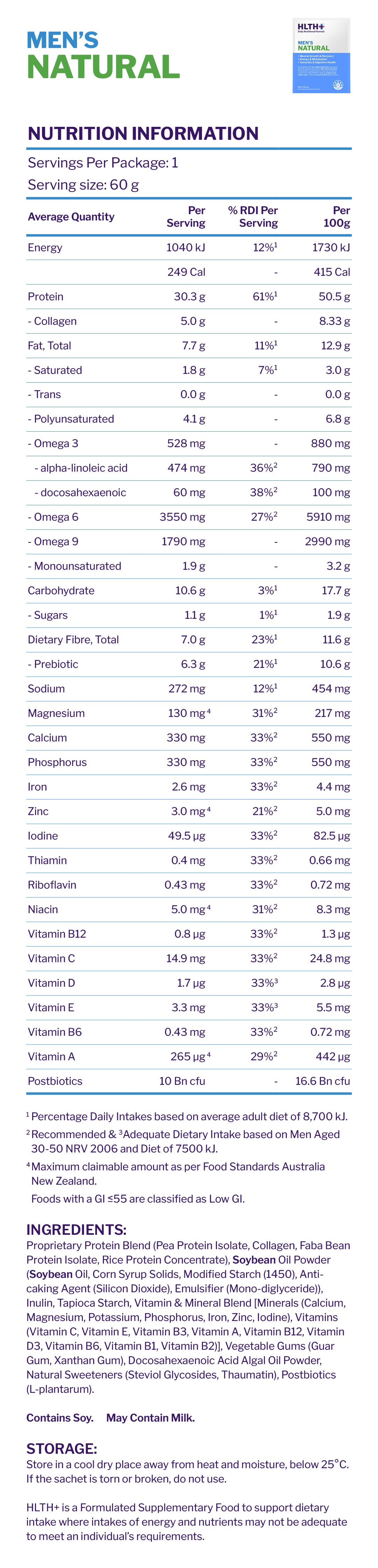
A sachet of HLTH+ (55g in Women's), an Australian made and dietitian formulated Formulated Supplementary Food, holds 30 essential daily nutrients, with 30g protein and 7g dietary fibre among them, at RRP $6.00. The ✦ Find My Formula quiz shows what your current routine is not giving you. Allow 30 seconds for it.
Each life-stage formula, Men's, Men's 50+, Women's and Women's 50+, follows the Nutrient Reference Values, whose authors are the National Health and Medical Research Council, the Australian Government Department of Health and Ageing and the New Zealand Ministry of Health, publishing jointly in 2006.
Protein contributes to the maintenance of muscle mass, as part of a healthy diet involving a variety of foods. Every serve has 30g protein, and the 28-serve subscription pack comes to $5.10 a day.
You can also find HLTH+ through Chemist Warehouse online or the Amazon AU brand store.
Who HLTH+ is formulated for
If your intake has shrunk and you would like 30g protein, 7g dietary fibre and the rest of 30 essential daily nutrients to sit beside your meals, HLTH+ is formulated for that purpose.
See what your routine leaves short. The quiz works as a check on your current supplement stack and lists the nutrients it misses. Check your stack with the quiz.
Frequently Asked Questions
How long does a headache from not eating last?
None of the Australian health pages used here gives a set duration. Better Health Channel lists blood-sugar swings among diet-related headache causes and says persistent headache should always be investigated by a doctor. A headache that keeps returning, or arrives with the warning signs above, needs a medical review instead of waiting it out.
Can drinking too little cause dizziness on standing?
Yes, according to healthdirect and Better Health Channel: dehydration is a listed cause of dizziness and of headache, and low blood pressure on standing can follow dehydration from vomiting or diarrhoea. Both advise changing position slowly. Dizziness that is persistent, severe or unexplained calls for a visit to your doctor.
Should I tell my prescriber about headaches and dizziness?
Yes. Better Health Channel advises reporting any side effects or unusual symptoms to your doctor, and the 2025 advisory lists headache and dizziness among the less common side effects. If you also take insulin or a sulphonylurea, mention that your intake has changed, because low blood sugar is a documented risk for that group.
What do the sources say about electrolytes?
MedlinePlus defines electrolytes as minerals with an electrical charge in body fluids, including sodium and potassium, and lists dehydration, vomiting and diarrhoea as ways levels change. It names headaches among symptoms of an imbalance. Your doctor or pharmacist can say if a product is right for you, particularly with kidney or heart conditions.
This article is general information, not medical advice. Decisions about any medication belong with your doctor.


Leave a comment
This site is protected by hCaptcha and the hCaptcha Privacy Policy and Terms of Service apply.