

On a nauseous day, healthdirect's first instruction is to stay hydrated: take small sips of cold, clear fluids, and eat small amounts often, because an empty stomach can make nausea worse (healthdirect, reviewed June 2025). The foods it lists as easier to eat are dry cracker biscuits, ginger, salty chips, clear soup and noodles. This page turns that into a day of small eats with the protein counted.
If you are mid-way through a bad day, the worry is rarely the nausea alone. It is that you have eaten almost nothing since morning and do not know whether to force something down or wait. The sources say not to skip meals, and also to go slowly, and both can be true at once.
Below: whether to eat or wait, what the government health sources list for food and fluid, a worked day with the protein sums shown, how to keep food down, and the point where a GP takes over from a cracker.
Is it better to eat or not eat when nauseous?
Healthdirect's answer is to eat, in small amounts: "Try not to skip meals, as an empty stomach can make your nausea worse. Eat small amounts more often." The NHS gives the same direction, listing smaller, more frequent meals among its self-care steps (NHS, last reviewed 17 November 2023). Both pages list fluid before food, and food follows in portions small enough that you are not facing a full plate.
The reason it matters is what happens when nausea runs on. Healthdirect states that nausea can lead to vomiting and keep you from eating and drinking, which can lead to dehydration and malnutrition, and then to other problems such as kidney problems. A few small crackers are therefore not a trivial step on a day when nothing else is going in.
The pattern across the sources is steady. Fluid first, then small amounts often, nothing fatty or fierce, and a doctor if it does not move. The rest of this page fills in each part of that, and the wider stomach and bowel questions sit in the digestion FAQ.
What are the causes, and when does nausea need a doctor?
Healthdirect says nausea has many causes. Infections such as gastroenteritis are common ones, and others include motion sickness, medicines and treatments such as chemotherapy, gallstones, acid reflux, migraine, pain, stress and anxiety, alcohol, and pregnancy. Feeling sick right after eating can come from food allergies or intolerances, overeating or food poisoning, and your doctor asks about other symptoms and may order tests to find the cause.
Some prescription appetite-lowering medicines list nausea among their adverse events. The STEP 1 trial compared a GLP-1 medication with placebo, and its abstract names nausea and diarrhoea as the most frequent ones (Wilding and colleagues, NEJM, 2021). Questions about a medication, including its dose and timing, belong with your prescriber, and the medication reader covers what the papers say.
This article is general information, not medical advice. Decisions about any medication belong with your doctor.
Healthdirect says to see your doctor if your nausea does not go away, or if you are vomiting a lot for more than 24 hours. It says to go to an emergency department or call triple zero (000) for chest pain, confusion, a high fever, a stiff neck, blurred vision, severe stomach pain or a bad headache. The full list sits in the last section.
What foods are easiest to eat when nauseous?
Healthdirect names five: dry cracker biscuits, ginger, salty chips, clear soup and noodles. It says some foods "may be easier to eat", and says to stay away from fatty, spicy or very sweet foods because these can make nausea worse. The NHS adds that you should not eat hot, fried or greasy food, should not eat or cook strong-smelling food, and should eat smaller, more frequent meals.
The NHS also lists ginger biscuits, ginger or peppermint tea, and taking regular sips of a cold drink. Both pages are general self-care advice written for the public, and neither one is a trial result. For the evidence behind each food, foods that help nausea goes food by food, and this page is about the day around them.
Three habits come up on the NHS page and on healthdirect:
- Eat slowly instead of quickly.
- Do not lie down soon after eating (the NHS), and try to rest (healthdirect).
- Keep eating and drinking apart, with a large drink away from the meal.
What can you drink when you are nauseous?
Healthdirect calls staying hydrated "the best thing to do" if you feel nauseous. It lists small sips of cold, clear fluids: water, herbal tea, lemonade and ginger ale, fruit juice and rehydration solutions. If you cannot drink, it suggests sucking on icy poles or ice cubes.
The Better Health Channel's page on gastroenteritis puts plenty of fluids first and suggests oral rehydration drinks from your pharmacist. It says dehydration is the main complication and that it can be avoided if the fluid lost in vomit and diarrhoea is replaced (Better Health Channel, last reviewed 11 March 2021). Healthdirect adds that nausea can make it hard to eat and drink, which can lead to other symptoms such as headaches, dizziness, fever, fatigue, weakness and drowsiness.
More on the wider picture is in side effects when you are eating much less.
What does a day of small eats look like, with the protein counted?
This is a worked example, not a prescription. Each food comes from the healthdirect or NHS lists above, or sits close to them (plain rice, egg, yoghurt), and the amounts are small ones chosen for this plan. Protein is each entry's figure per 100g in the national food composition database kept by Food Standards Australia New Zealand (AFCD Release 3.0, read on 13 October 2026), multiplied by the grams in the plan.
| Time | Food | Amount | AFCD protein per 100g | Protein |
|---|---|---|---|---|
| Morning | Water cracker biscuits | 20g | 10.4g | 2.1g |
| Morning | Natural yoghurt, regular fat, cold | 100g | 5.3g | 5.3g |
| Mid-morning | Reduced-fat cow's milk, cold | 100g | 3.5g | 3.5g |
| Lunch | White rice, boiled | 100g | 3.1g | 3.1g |
| Lunch | Chicken breast, baked, shredded | 50g | 29.0g | 14.5g |
| Afternoon | Egg, hard-boiled | 50g | 12.4g | 6.2g |
| Evening | White pasta, boiled | 100g | 5.3g | 5.3g |
| Evening | Tuna, canned in water, drained | 40g | 26.1g | 10.4g |
| Day total | 50.4g |
The sum is 2.1 + 5.3 + 3.5 + 3.1 + 14.5 + 6.2 + 5.3 + 10.4, which comes to 50.4g across eight small eats, and each line is a portion you can see the end of. Nothing on the list is a target. A day that goes worse than this one will total less, and the number is there so you can see where the protein sits, not to measure yourself against it; high-protein snacks lists more small options.
When liquids are easier than solids
On some days a cracker is too much. AFCD figures for the two simplest liquids in the plan are below, again per 100g and multiplied by the amount.
| Liquid | Amount | AFCD protein per 100g | Protein |
|---|---|---|---|
| Reduced-fat cow's milk, cold | 250g | 3.5g | 8.8g |
| Chicken and noodle soup, prepared from instant dry mix with water | 250g | 0.7g | 1.8g |
Milk carries about five times the protein of the soup per 100g, and clear soup is on healthdirect's list of easier foods. Healthdirect says not to skip meals, so this plan treats a liquid as a small meal. Whether either is right for you on a given day is a call for you and your dietitian or doctor.
How do you keep food down?
None of the sources promise a method, and the answer is a short list of habits. From the pages above:
- Take regular small sips of cold fluid, and keep large drinks away from the meal (NHS, healthdirect).
- Eat small amounts often, and try not to let the stomach go empty (healthdirect).
- Eat and drink slowly, and stay upright after eating (NHS).
- Skip the fatty, fried, spicy, very sweet, hot or strong-smelling options (healthdirect, NHS).
- Rest, and if you are often nauseous, eat small meals when you do not feel sick (healthdirect).
If it keeps happening, a pattern helps a doctor or dietitian more than a single bad day. A note of what you ate, when, and what came back up is the useful thing to bring, and other upper-gut symptoms such as sulphur burps have their own page. Healthdirect says that if nausea happens after a certain food, you can visit a dietitian, who can help diagnose and manage it.
Reading on: learn more.
What role does a Formulated Supplementary Food play on a smaller day?
This section is about the plate on any day when less goes in than usual, for whatever reason: rapid weight loss, reduced eating and medically induced weight loss each shrink intake in the same way. A smaller day tends to begin from a shortfall: over 90% of Australian adults do not meet dietary guidelines (AIHW). Plain snacks such as those in high-protein snacks are one answer, and nutrition on a smaller appetite is another.
What one sachet of HLTH+ contains
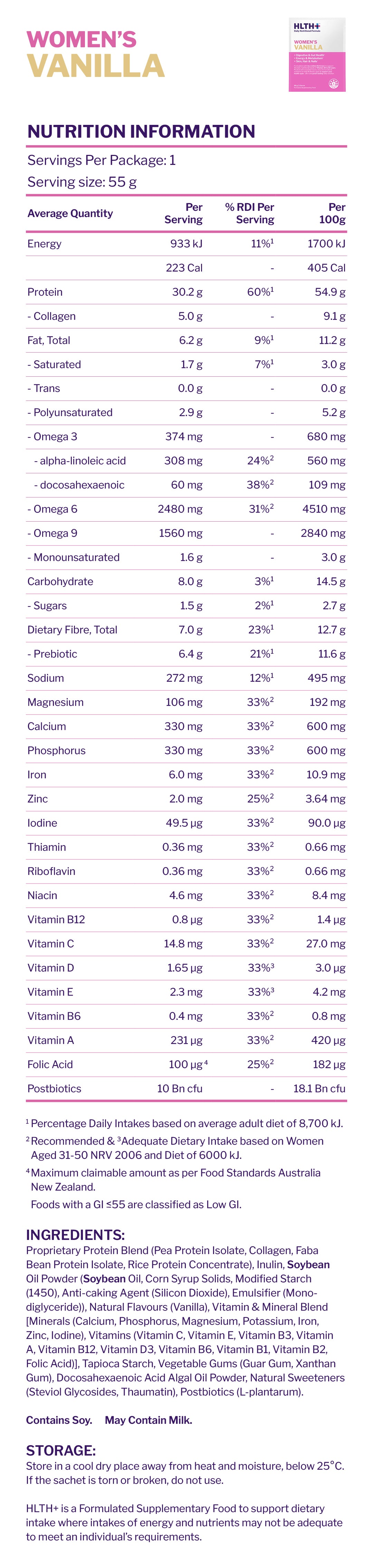
As a Formulated Supplementary Food, HLTH+ is Australian made and dietitian formulated, and it is nutritional insurance beside a food-first approach rather than a stand-in for one. One sachet (55g in Women's) costs RRP $6.00 and carries 30 essential daily nutrients, among them 7g dietary fibre and 30g protein. Women's · Women's 50+ · Men's · Men's 50+: all are formulated to the Nutrient Reference Values (NRVs): published 2006; developed by the National Health and Medical Research Council, the Australian Government Department of Health and Ageing, and the New Zealand Ministry of Health.
Every serve carries 30g of protein. Protein contributes to the maintenance of muscle mass when eaten as part of a healthy diet involving a variety of foods. As for meals, it is not designed as a meal replacement because it complements a food-first approach; but it works fine as a healthy snack or to tie you over.
Subscribers pay per day: $142.80 across 28 serves is $5.10 a day. Chemist Warehouse online and Amazon AU carry it too.
Who it suits
On a smaller day, if you want protein, dietary fibre and a balanced multivitamin profile in one sachet, HLTH+ is built for that. The ✦ Find My Formula quiz shows what your current routine is not giving you. Start the quiz here.
When does nausea that keeps you from eating need a GP?
Healthdirect says to see your doctor if your nausea does not go away or you are vomiting a lot for more than 24 hours. The NHS says to see a GP if you feel sick and do not feel better in a few days, or if you often feel sick and it keeps coming back. Both pages treat chest pain as urgent: the NHS says sudden sickness with tight or heavy chest pain, pain spreading to the arms, back, neck or jaw, or shortness of breath could be a heart attack and needs a 999 call, which is the UK number.
In Australia, healthdirect says to go to a hospital emergency department or call triple zero (000) for chest pain, confusion, a high fever, a stiff neck, blurred vision, severe pain in your stomach or a bad headache. It also lists its helpline, 1800 022 222, where a registered nurse is available 24 hours a day. If you are pregnant and nauseous, healthdirect says to talk to your doctor about help, because they will choose a medicine that is safe for you and your baby.
Healthdirect names one pattern you can see for yourself: nausea that follows a certain food. For that one it says a dietitian is a route as well as a doctor.
Frequently Asked Questions
Which clear fluids does healthdirect list when you feel sick?
Healthdirect lists water, herbal tea, lemonade and ginger ale, fruit juice and rehydration solutions, taken as small sips of cold, clear fluid. If you cannot drink, it suggests sucking on icy poles or ice cubes. The Better Health Channel adds that oral rehydration drinks are available from your pharmacist (healthdirect, reviewed June 2025).
Should you drink with your meals when you feel nauseous?
Two sources say to keep the two apart. Healthdirect says to try not to eat and drink at the same time, and the NHS says not to have a large drink with meals. Both suggest regular small sips of cold fluid between eating instead, and the NHS adds eating slowly and not lying down soon after a meal.
What if you cannot keep any food or drink down?
Healthdirect says nausea that leads to vomiting can keep you from eating and drinking, which can lead to dehydration and malnutrition. It advises seeing a doctor if you are vomiting a lot for more than 24 hours. Dehydration that is severe may need fluids given through a drip in hospital.
Which foods do the sources say to stay away from?
Healthdirect says to try to stay away from fatty, spicy or very sweet foods, which can make nausea worse. The NHS says not to eat hot, fried or greasy food, not to eat or cook strong-smelling food, and not to eat too quickly. Both pages are general self-care advice, not a personal plan.
Is this page a substitute for seeing a doctor or dietitian?
No. A page like this describes general self-care and cannot assess you. Your doctor makes the calls on medication, and an Accredited Practising Dietitian can review what you eat. Healthdirect suggests visiting a dietitian if nausea follows a certain food, because they can help diagnose it.
This article is general information, not medical advice. Decisions about any medication belong with your doctor.

Leave a comment
This site is protected by hCaptcha and the hCaptcha Privacy Policy and Terms of Service apply.