


Plain, dry foods and small sips of cold clear fluid are what health services list first for a queasy stomach. Dry crackers, plain noodles or rice, clear soup and salty chips sit on the easy list, and fatty, fried, spicy and very sweet foods sit on the leave-alone list (healthdirect, Nausea, reviewed June 2025). Of the foods on these lists, ginger is the one this page can point to trials for, and those trials come mostly from pregnancy and chemotherapy.
If you are feeling sick right now and wondering what you can face, the answer is usually less than a meal and more often than you would like. Most lists online repeat each other without saying where the advice comes from or how strong it is.
This page sorts the foods into three groups: those the health services recommend, the one with trial evidence, and those they say to avoid. It also covers when nausea needs a doctor and what to do about nutrition on days you are eating very little.
Do bland, dry foods help nausea?
Bland, dry foods are the most consistent advice across the sources. The healthdirect page lists dry cracker biscuits, ginger, salty chips, clear soup and noodles as foods that may be easier to eat and can help you feel better, and its page on vomiting adds rice and pasta as bland foods to eat while your diet returns to normal (healthdirect, Vomiting, reviewed February 2024).
Portion size matters as much as the food. The healthdirect page says to try not to skip meals because an empty stomach can make nausea worse, and to eat small amounts more often. The NHS gives the same direction in its page on feeling sick: smaller, more frequent meals, and eating slowly instead of quickly (NHS, Feeling sick (nausea), reviewed 17 November 2023).
The evidence behind this advice is guidance from health services, not a body of trials. None of the pages above cites a study showing that crackers settle a stomach, so read them as practical starting points. The same applies to the bad-day version of this advice, which is laid out meal by meal in what to eat when you're nauseous.
What stops nausea right away?
No food in these sources works instantly, and none of them claims one does. What healthdirect calls the best thing to do is to stay hydrated, taking small sips of cold, clear fluids such as water, herbal tea, lemonade, ginger ale, fruit juice or a rehydration solution. If you cannot drink, it suggests sucking on icy poles or ice cubes.
The NHS also lists regular sips of a cold drink. Neither page says why cold fluid is preferred, so treat it as practical advice. How to keep fluid going across a whole bad day sits in the sibling page on what to eat when you're nauseous.
One difference between the pages is worth knowing. The healthdirect nausea page lists fruit juice among clear fluids, while its vomiting page, written for gastroenteritis and food poisoning, says to avoid fruit juice, cordial and sugary drinks, and to avoid alcohol and caffeine. For that illness it adds that oral rehydration solutions are better than plain water because they carry the right concentration of salts, and that sports rehydration drinks are not recommended.
Does ginger help nausea?
Ginger is the food on the list with trials behind it, and the research is mixed. The healthdirect vomiting page says ginger may help with nausea and vomiting caused by pregnancy, chemotherapy and motion sickness. The NHS suggests ginger tea or foods containing ginger, such as ginger biscuits.
The trials behind those lines are mostly in two groups, pregnant women and people having chemotherapy, so they say little about nausea from other causes. A 2014 systematic review of 12 randomised trials with 1,278 pregnant women found ginger significantly improved nausea symptoms compared with placebo (mean difference 1.20, 95% CI 0.56 to 1.84), with no significant effect on the number of vomiting episodes (Viljoen et al, Nutrition Journal, 2014). The authors rated the evidence as low quality and the studies as few.
Chemotherapy gives a less clear picture. A 2013 meta-analysis of five randomised trials with 872 patients found no significant difference between ginger and control in the incidence of acute nausea or vomiting (Lee and Oh, Oncology Nursing Forum, 2013). A larger 2022 systematic review of 23 trials found no significant difference for acute or delayed nausea, though in a subgroup taking no more than 1 g of ginger a day for more than four days, acute vomiting was lower (odds ratio 0.30, 95% CI 0.12 to 0.79) (Choi et al, Nutrients, 2022). Both reviews call for better-designed trials.
What about peppermint, and does lying down help?
The NHS lists ginger or peppermint tea among the drinks to try, and none of the pages cited here gives trial evidence for peppermint as a food or drink. Treat it as a gentle option people use, not a proven one. A warm mug also counts toward fluid, which healthdirect puts first.
Posture is a smaller point. The NHS advises against lying down soon after eating, and no page cited here says that lying down at other times helps or hurts.
Which foods make nausea worse?
The leave-alone list is consistent too. The healthdirect page says to stay away from fatty, spicy or very sweet foods because they can make nausea worse. The NHS says not to eat or cook strong-smelling food, not to eat hot, fried or greasy food, not to eat too quickly and not to have a large drink with meals.
That answers a common question directly. Can fries help with nausea? Going by these sources, no: fried and greasy food is on the avoid list, and healthdirect's vomiting page suggests reducing the fat content of meals while the cause is worked out. The NHS also says not to cook strong-smelling food.
Food is only one part of it. Nausea has many causes, from infections and food poisoning to motion sickness, migraine, stress, gallstones, acid reflux and medicines, and healthdirect lists all of them. If nausea follows a certain food every time, healthdirect suggests seeing a dietitian. If medication is the likely cause, the page for that reader is nausea on a GLP-1, and GLP-1 side effects covers the wider list.
When does nausea need a doctor?
healthdirect says to see your doctor if your nausea does not go away, and to see a doctor if you are vomiting a lot for more than 24 hours. The NHS says to see a GP if you have been feeling sick for a few days without improvement or if it keeps coming back. Nausea that follows a certain food can be worth a visit to a dietitian.
Some signs need emergency care. The healthdirect page says to go to an emergency department or call triple zero (000) for chest pain, confusion, a high fever, a stiff neck, blurred vision, severe stomach pain or a bad headache. Its vomiting page adds that vomiting blood, bile or what looks like coffee grounds needs the same response. Being unable to keep more than a few sips of liquid down, or vomiting for more than 48 hours, needs prompt medical attention from your doctor or an emergency department.
The vomiting page also says to make an appointment if you have been vomiting and have lost weight without knowing why. For ongoing digestive questions, GLP-1 and digestion and sulphur burps cover two common ones.
This article is general information, not medical advice. Decisions about any medication belong with your doctor.
Side effects and eating less, in one place: learn more.
How does nutrition fit in when you are eating very little?
A day or two of small, plain meals is common, and the nutrition question is a separate one from the food list above. In the AIHW data, over 90% of Australian adults do not meet dietary guidelines (AIHW). The gap means a smaller intake often begins from a shortfall rather than a surplus. Crackers, noodles and clear soup are mostly starch and fluid, so protein is the part of a plain-food day worth a second thought.
A dietitian can build a plan around what you can manage, and food comes first: eggs, yoghurt, milk and soft tofu are everyday protein foods.
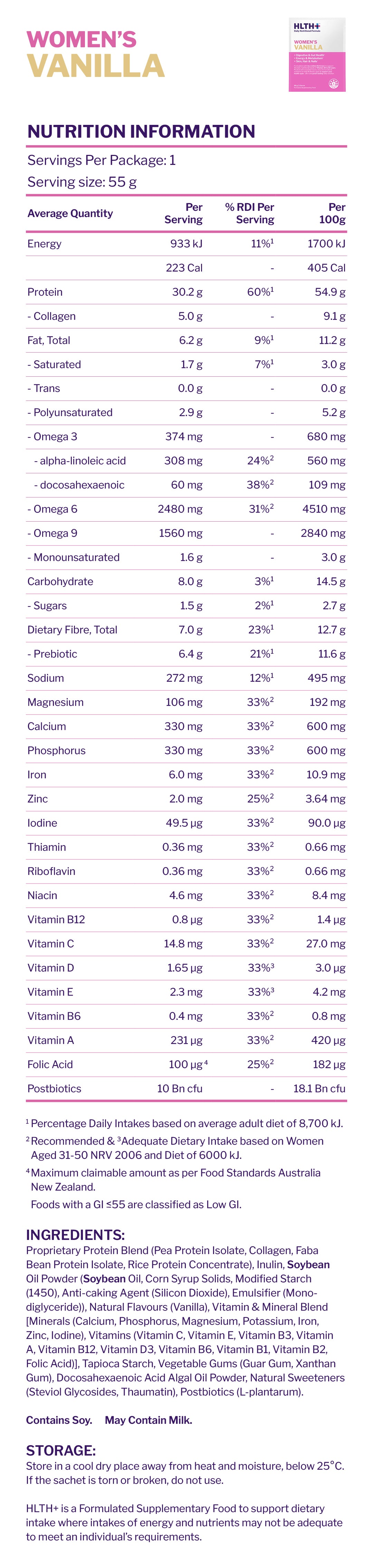
Where a Formulated Supplementary Food sits beside food
HLTH+ is an Australian-made, dietitian-formulated Formulated Supplementary Food, designed to sit beside meals on a food-first basis. One sachet gives you 30 essential daily nutrients, 7g dietary fibre and 30g protein (a 55g sachet in Women's), at RRP $6.00. The formulas follow the Nutrient Reference Values (2006), set out by the National Health and Medical Research Council, the Australian Government Department of Health and Ageing and the New Zealand Ministry of Health. Men's, Men's 50+, Women's and Women's 50+ each have a formula.
Protein contributes to the maintenance of muscle mass. That statement applies as part of a healthy diet involving a variety of foods. Subscribing to the 28-serve pack costs $5.10 a day. Both Chemist Warehouse online and Amazon AU stock it. For protein, dietary fibre and daily nutrients across a smaller appetite, nutrition on a smaller appetite goes further.
Where to take it from here
The sections above hold the evidence, and your GP or an Accredited Practising Dietitian holds the personal advice. For a single sachet carrying 30 essential daily nutrients, dietary fibre and protein beside your meals while you eat less, HLTH+ is built for that.
Check your gaps. The ✦ Find My Formula quiz shows what your current routine is not giving you. Half a minute is all it takes: start the quiz.
Frequently Asked Questions
What should I eat first after being sick?
Start with small sips of clear fluid, then bland foods such as rice, pasta and crackers, according to healthdirect's page on vomiting. Its advice for a gastro illness is to avoid fruit juice, cordial, sugary drinks, alcohol and caffeine, and to get medical attention from a doctor or an emergency department if you cannot keep water down.
Should I skip meals when I feel sick?
The healthdirect page says to try not to skip meals, because an empty stomach can make nausea worse, and to eat small amounts more often. The NHS gives the same advice about smaller, more frequent meals. If even a few sips of liquid will not stay down, healthdirect advises getting medical attention.
How long is nausea too long?
The healthdirect page advises seeing a doctor if nausea does not go away, or if you are vomiting a lot for more than 24 hours. The NHS advises seeing a GP if feeling sick does not ease within a few days or keeps coming back. Chest pain, confusion, a high fever or severe stomach pain need an ambulance.
Is ginger safe to try when I feel sick?
The healthdirect page and the NHS both list ginger among the foods to try, such as ginger tea or ginger biscuits. A 2014 review of trials in pregnancy found no significant increase in side effects such as heartburn or drowsiness. That review covered pregnancy only, so if you take prescribed medication, ask your doctor or pharmacist first.
Can I rely on this page instead of seeing a doctor?
No. Nothing here is personal medical advice, and any medication decision is one for you and your doctor. An Accredited Practising Dietitian can review what you eat day to day. The guidance and trials cited describe groups of people and cannot explain what is behind your own nausea.
This article is general information, not medical advice. Decisions about any medication belong with your doctor.

Leave a comment
This site is protected by hCaptcha and the hCaptcha Privacy Policy and Terms of Service apply.