

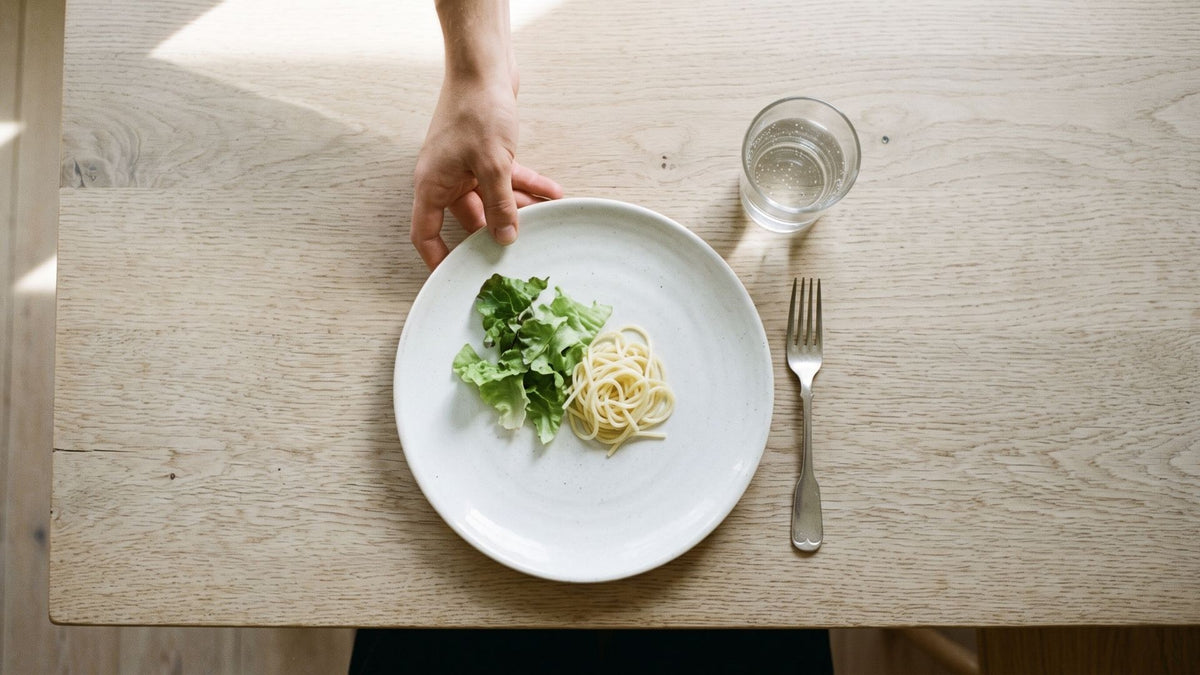
How should you approach food in the first week?
In the first week of a prescribed treatment, plan manageable meals and regular opportunities to drink, while following your clinician's advice. Appetite and symptoms do not follow an identical timetable for everyone. Record difficulties early, and contact your healthcare team if you cannot eat or drink adequately or develop concerning symptoms.
The most useful preparation is often practical: food you can manage, a way to notice missed meals and clear contact details for the person overseeing your care. You do not need a complicated menu or someone else's account of what each day should feel like.
This guide helps organise those first-week food decisions. The seven-day meal plan provides separate meal ideas, while this page focuses on preparing, observing and adjusting with professional advice.
On this page: expectations; preparation; meal opportunities; a smaller plate; fluid intake; food variety; symptom records; contacting your clinician; daily nutrition.
What can you expect from appetite in week one?
GLP-1 medicines affect appetite and digestive function, and gastrointestinal symptoms may occur during treatment initiation or adjustment. The 2025 joint nutritional advisory recommends individual assessment of intake and tolerance. Your first-week experience should be discussed with the prescriber rather than used to change treatment yourself or judge it against another person's experience.
A social-media timeline cannot tell you how much you should eat on Tuesday or whether a particular sensation is expected for you. Nor does the absence of a dramatic appetite change give you a reason to alter a prescribed plan.
Write down what you can actually observe: which meals you ate, whether you finished them, how comfortable eating felt and whether drinking was manageable. Those details are more useful for a review than deciding that the week matched or failed an online description.
For background on food when intake changes, visit the nutrition overview. Your clinician can explain what to watch for in your own circumstances.
What should you organise before the week begins?
Make preparation small enough to finish. The aim is to reduce decisions when you are busy or do not feel like cooking, not to fill the fridge with an entirely new diet.
Choose familiar foods from several groups. Depending on what you usually eat, that might include eggs, yoghurt, tofu, fish, bread, oats, rice, vegetables and fruit. Check any allergies, existing dietary instructions and storage requirements before shopping.
A useful preparation list includes:
- A breakfast option that takes little effort.
- A lunch you can assemble without a full cooking session.
- Portions of a familiar cooked dinner.
- Food suitable for work or travel.
- A drink bottle or another convenient way to access water.
- Your clinic's contact details and instructions about symptoms.
Prepare modest amounts until you know what is useful. Buying a large quantity of one food because someone online recommended it can leave you with meals you do not enjoy or tolerate.
If someone else cooks at home, explain the practical plan. Ask for a smaller initial serving with the option to adjust, rather than making the shared meal a discussion about how much you should finish.
How do you plan small, regular meals without rigid rules?
Use the structure of your usual day to identify eating opportunities. Breakfast before leaving home, lunch during a work break and an evening meal are easier to remember than a schedule copied from a stranger.
The joint advisory discusses smaller, more frequent meals when intake is reduced. That does not require constant grazing or a fixed number of meals for everyone. A dietitian can help if you are repeatedly unable to manage enough food.
Here is a planning example, not a prescribed menu:
| Point in the day | Decision to make beforehand | What to notice |
|---|---|---|
| Morning | Which familiar breakfast is available? | Did you eat, or did the morning pass with only a drink? |
| Midday | Where will lunch come from? | Was the portion manageable and the break long enough? |
| Afternoon | Is there a planned food option if needed? | Are you repeatedly missing an opportunity to eat? |
| Evening | What can be served in a smaller initial portion? | Did comfort, timing or cooking effort limit the meal? |
| Before shopping again | Which foods were useful? | What should be repeated or changed? |
A reminder on your phone can be an organisational aid if meetings regularly displace lunch. It is not a signal to force food through significant discomfort.
If the day goes differently from the plan, make a note and return to the next appropriate opportunity. The record is there to help identify a workable routine, not to score your performance.
What belongs on a smaller plate?
A smaller meal still needs thought about variety. Repeatedly reducing every meal to a few bites of one food can make it difficult to see which food groups have disappeared.
Start by considering a protein food, a suitable carbohydrate food and a vegetable or fruit component, adjusting the combination to your appetite and clinical advice. These are building blocks, not a claim that every small plate provides complete nutrition.
Examples to discuss or adapt include egg with toast, yoghurt with oats and fruit, fish with rice and cooked vegetables, or tofu with a familiar grain. No exact nutrient total is given because quantities, brands and preparation change the result.
The Australian Guide to Healthy Eating describes variety across the five food groups. That remains useful background when planning the whole day's intake, even if individual meals are smaller.
If a usual meal feels too large, serving less initially may be easier than facing a full plate. If a texture or preparation is difficult, record that specifically rather than declaring an entire food group unsuitable.
For practical distinctions between soft textures, cooking methods and individual tolerance, see easily digestible foods. Swallowing difficulties need assessment and should not be managed simply by blending meals yourself.
How can you notice whether protein foods are being missed?
Look at the meals you actually completed. If breakfast was skipped, lunch was plain crackers and dinner was a few spoonfuls of rice, the useful question is which protein foods you can reasonably include and manage.
That is more informative than buying several products before reviewing the pattern. You may already have suitable foods available but need a simpler preparation or a different shopping routine.
List a few options you usually enjoy, including animal or plant foods as appropriate. Then identify where they fit in the day and what preparation they require. Keep the list realistic for your budget and kitchen.
An Accredited Practising Dietitian can individualise the amount and distribution, particularly when there are other medical conditions or ongoing difficulty eating. The protein guide explains the food context in more detail.
There is no need to turn the first week into a contest to reach an online protein target. An appropriate plan considers total intake, tolerance, health history and the rest of the diet.
What should you watch for with fluids?
Make drinking easy to remember and access. A bottle at your desk or a glass alongside your normal activities can reveal whether a busy day is passing without much fluid.
healthdirect's dehydration guidance identifies thirst, a dry mouth, darker urine and passing less urine as possible signs. Vomiting or diarrhoea can increase fluid losses. Symptoms such as confusion or severe weakness require urgent assessment.
Those signs are a reason to respond and seek advice when needed, not a precise home test of hydration. If you have a prescribed fluid limit or a condition affecting fluid management, follow your own clinical instructions.
Avoid treating a universal litre target as suitable for everyone. What matters in this first-week record is whether drinking is manageable, whether losses are occurring and whether you need help.
If you cannot keep fluids down or are becoming unwell, contact a clinician promptly. Do not wait until you have collected several days of notes before asking for advice.
Should you change fibre or cut out foods immediately?
Start by noticing your existing pattern and any symptoms. There is no reason to launch several restrictive diets at once simply because treatment has begun.
A sudden collection of new powders, bars and large vegetable portions also makes it harder to identify what you are eating and what has changed. Keep an ingredient list or product label available if you introduce something new.
For general food choices, Eat for Health's vegetable and legume guidance describes the value of variety. How you include those foods during a period of digestive difficulty should be tailored, rather than translated into a universal instruction to eat more or less fibre.
The separate dietary fibre guide explains sources and label amounts. If constipation, diarrhoea or significant discomfort develops, discuss the symptoms and current intake with your healthcare team.
Rapid weight loss, reduced eating and medically induced weight loss deserve an individual nutrition review when the routine no longer covers ordinary food needs. Restriction should not become the default response to every unfamiliar sensation.
What should a useful first-week record contain?
Keep it brief enough that you will use it. A few plain sentences are often more helpful than a complicated spreadsheet with guessed nutrient totals.
Record the meal or drink, approximate time, what you managed and any relevant difficulty. “Ate half my usual lunch; felt uncomfortable soon afterwards” gives more context than “bad food day”.
Include sleep or work circumstances if they explain a missed meal. Note whether a symptom began before or after eating, but do not assume that timing proves the food caused it.
At the end of the week, identify the main practical difficulty: missed lunches, a narrowing food range or nausea that prevents drinking. Ask your clinician whether that pattern needs a change to the food plan or further assessment.
Bring that question to the appropriate person. The purpose of recording is to make care more specific, not to diagnose a condition or decide on a medication change alone.
When should you contact your healthcare team?
Contact them when symptoms are worrying, persistent, worsening or preventing adequate intake. Severe or persistent abdominal pain, repeated vomiting, inability to keep fluids down or marked dehydration need prompt medical attention.
If you have diabetes or another condition with an established action plan, follow that plan and the advice you were given. Ask for clarification early if you are unsure how reduced intake affects your existing care.
The digestion questions page provides general background. A page cannot assess the severity or cause of your symptoms, so a first-week checklist should never delay contacting a clinician.
How does a daily nutrition formula fit into food planning?
A formula is one possible nutritional addition to review alongside ordinary meals. Assess what its label contributes, whether it suits your circumstances and what is already supplied by other products you use.
HLTH+ is a Formulated Supplementary Food. It provides 30g protein per serve; dietary fibre is 7g per serve, with a balanced multivitamin profile included in the formulation.
The life-stage approach draws on Nutrient Reference Values from the National Health and Medical Research Council, the Australian Government Department of Health and Ageing and the New Zealand Ministry of Health. This describes formulation context, not a personalised assessment of your needs.
The ✦ Find My Formula quiz can help review gaps in your supplement stack. Any difficulty eating or drinking should be discussed with your healthcare team separately.

Frequently Asked Questions
Is there a normal day when my appetite should change?
There is no single first-week timetable that tells everyone how their appetite should feel. Follow the prescribed plan and discuss questions with your clinician. Record your actual eating pattern and symptoms rather than comparing with someone else's account, and do not alter treatment to match an online description of progress.
Should I wait until I feel hungry before eating?
If hunger cues have changed, discuss an appropriate meal routine with your clinician or dietitian. Planned eating opportunities can help you notice missed meals, but significant discomfort should not be ignored. The aim is manageable, adequate intake for your circumstances, with professional help when the usual routine is no longer working.
Do I need to prepare a completely different menu?
Usually, preparation can begin with familiar foods and simple combinations rather than a wholesale change. Think about what is available at breakfast, lunch and dinner, how much cooking is realistic and which food groups are being missed. Existing medical dietary advice takes priority over a generic first-week shopping or meal list.
What if I can barely manage food or fluids?
Contact your healthcare team promptly instead of treating very low intake as a goal. Explain what you have managed, any vomiting or diarrhoea, and signs of dehydration. Severe symptoms or inability to keep fluids down need timely assessment; a food diary is useful context but should not delay seeking help.
This is general information, not medical advice. Discuss medication decisions with your doctor and seek individual dietary guidance when intake or symptoms are difficult to manage.

Leave a comment
This site is protected by hCaptcha and the hCaptcha Privacy Policy and Terms of Service apply.