

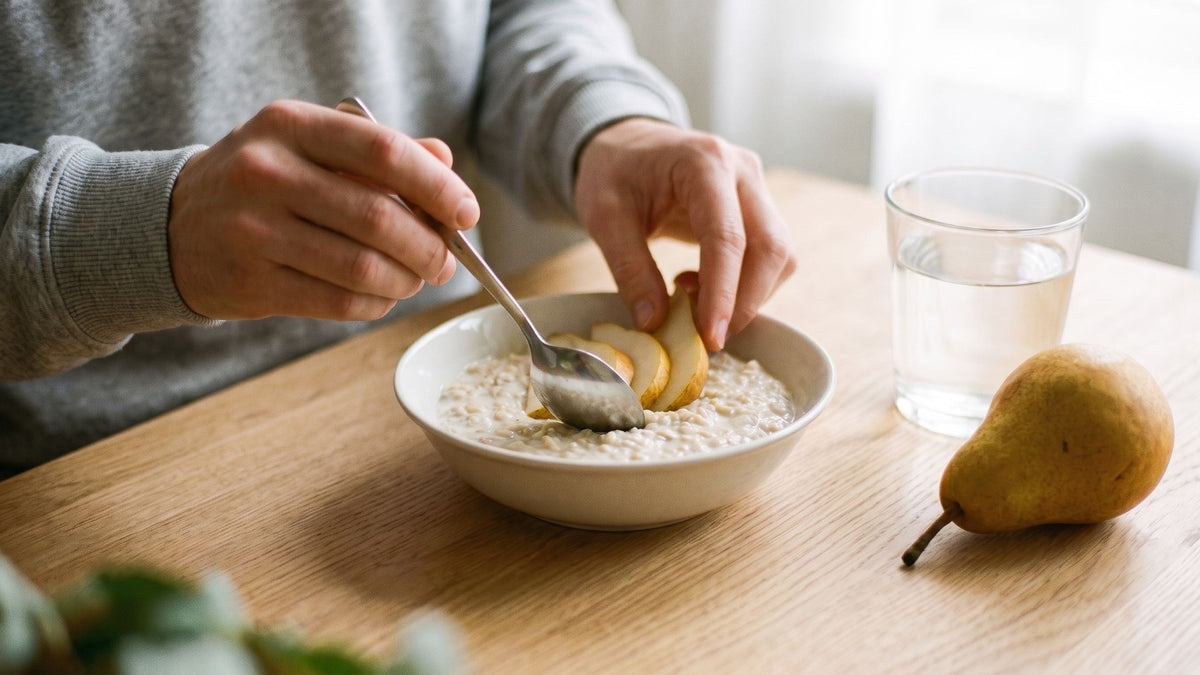
Your appetite has changed. Your meals are smaller. Now your usual toilet routine may have changed too.
Constipation is a recognised side effect of GLP-1 medications. Changes in digestion, eating less and drinking less can all play a part. For mild symptoms, dietary fibre, adequate fluid and regular movement are useful starting points, alongside advice from your healthcare team. Clinical recommendations.
This HLTH+ article explains the bowel changes to discuss with your healthcare team, then looks at everyday food and fluid intake when your portions are smaller. It is written for adults already receiving prescribed care.
This article is general information, not medical advice. Decisions about any medication belong with your doctor.
Why can GLP-1 medications cause constipation?
These medicines can slow stomach emptying and affect movement through the digestive tract. Feeling fuller can also mean eating and drinking less. The effect differs between people and medicines. Expert consensus.
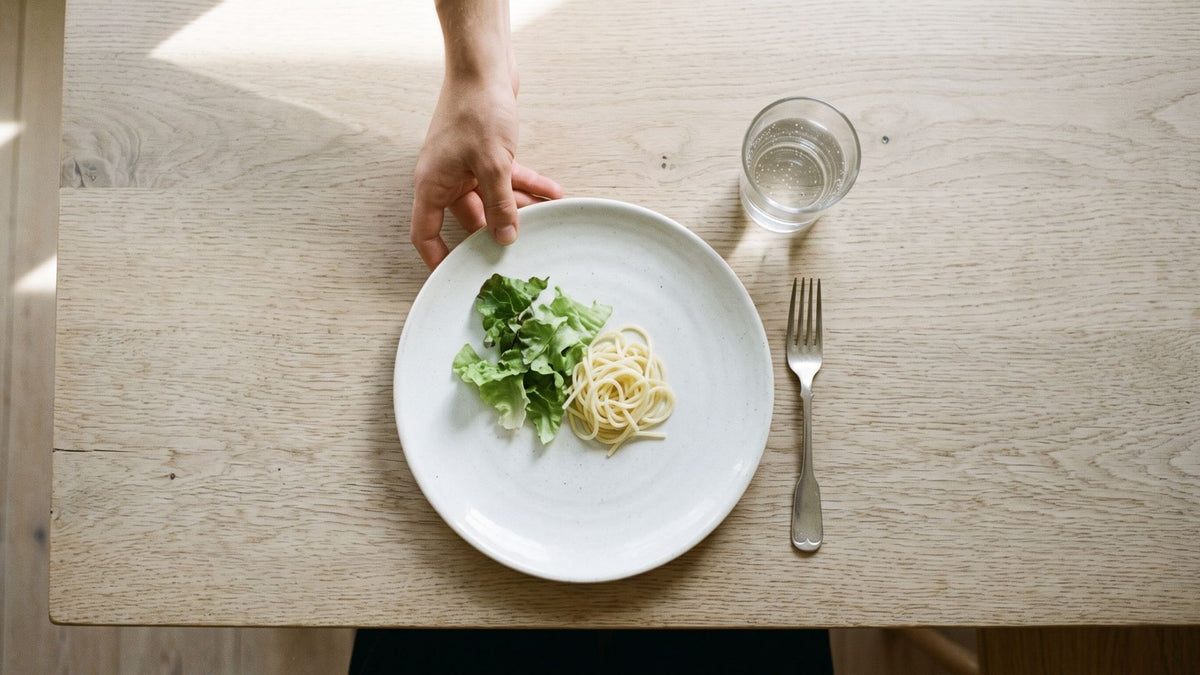
Think about the foods that may have quietly disappeared from your day: breakfast cereal, a piece of fruit, wholegrain toast or the vegetables you used to finish at dinner. Smaller portions can mean less dietary fibre as well as less food overall.
That reduced intake is a reason to review what your meals and snacks contain. A dietitian can help you assess dietary fibre and other nutrients while your prescriber considers the cause of your bowel symptoms.
Which foods contribute dietary fibre to your day?
Dietary fibre helps give stools bulk, and some types retain water to help keep stools softer. Fibre comes from a range of foods, including wholegrains, fruit, vegetables and legumes. Increasing your intake gradually can help limit wind and bloating. Cambridge University Hospitals’ bowel guidance.
Start with manageable additions:
- Oats with fruit at breakfast.
- Wholegrain bread with lunch.
- A small portion of beans or lentils in soup.
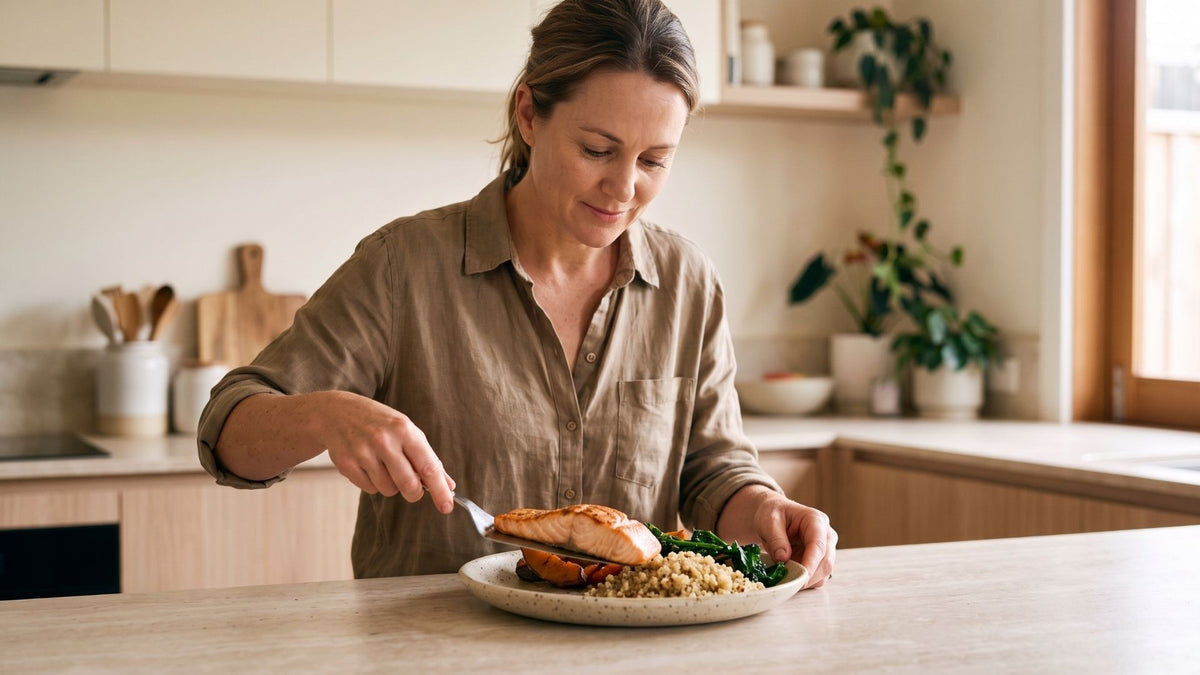
- Cooked vegetables alongside dinner.
- A pear or kiwifruit when you want a snack.
HLTH+ is a Formulated Supplementary Food designed to complement a food-first approach. Its Women's Vanilla nutrition panel declares 7g dietary fibre per 55g serve. Count that amount alongside the fibre in your meals and snacks when reviewing your daily intake. These amounts refer to the powder, before anything added during preparation. Manufacturer's nutrition panel.
Build gradually rather than adding several fibre products at once. If higher-fibre foods repeatedly cause significant discomfort, ask your doctor or dietitian how to adjust your intake.
How much dietary fibre do you need each day?
The Australian and New Zealand Nutrient Reference Values set an adequate intake of 25g a day for adult women and 30g for adult men. These are general nutrition reference amounts, rather than a treatment dose for constipation.
The values come from the National Health and Medical Research Council, the Australian Government Department of Health and Ageing and the New Zealand Ministry of Health. Pregnancy and breastfeeding have different reference amounts. Dietary fibre Nutrient Reference Values.
Against those reference amounts, the 7g dietary fibre in a serve of HLTH+ Women's Vanilla makes a useful contribution. Fruit, vegetables, wholegrains and legumes help you build the rest of your intake across the day.
The aim is a repeatable routine. If you currently eat very little fibre, increase it gradually and get individual advice if symptoms persist.
For more on everyday intake, read Dietary Fibre on a GLP-1.
How can you plan nutrition when portions are smaller?
When appetite is smaller, fitting in a varied diet can take more planning. The joint advisory from major nutrition and obesity organisations recommends attention to nutrient adequacy, food tolerance and hydration during prescribed care. A dietitian can help adapt meals to the amount you can comfortably eat. Joint nutritional advisory.
For everyday food planning, HLTH+ brings dietary fibre and protein together in one serving. Women's Vanilla provides 30g protein alongside its dietary fibre, giving you two declared amounts to include when you review your daily intake. Manufacturer's nutrition panel.
HLTH+ is not designed as a meal replacement, because it is built to complement a food-first approach. It can fit as a nutritious snack or help tide you over between meals.
Choose meals and snacks that fit your appetite and individual dietary needs. A dietitian can help you build variety into smaller portions.
How do fluids fit into daily nutrition?
Adequate fluid helps dietary fibre do its job. Drinking enough is particularly important when you increase fibre or use a fibre supplement. NIDDK constipation guidance.
Prepare HLTH+ with water or your preferred milk according to the pack directions, and keep drinking regularly throughout the day. Making your shake can also be a useful prompt to fill your water bottle or put a glass of water on your desk.
If larger drinks feel uncomfortable, smaller amounts more often may be easier. If your clinician has prescribed a fluid restriction, follow that plan and ask how to meet your nutrition needs within it.
How can you make a daily routine easier to maintain?
A manageable food routine gives you fewer things to remember. Choose regular opportunities for meals, snacks and fluids, and plan around the foods you can comfortably eat.
If HLTH+ suits your dietary needs, give it a consistent place in your food routine, such as your usual snack time. Keep the sachet and shaker where you prepare it, and use the pack directions for your serving.
This makes your nutrition easier to keep track of: what you ate, what you drank and where your dietary fibre came from. You can bring that information to a dietitian or doctor if your intake or bowel habits remain a concern.
How long does GLP-1 constipation last?
There is no single timeline. Constipation can last longer than some other digestive side effects, and clinical guidance describes symptoms continuing for weeks in some people. Address it early rather than assuming you need to wait it out. Expert consensus.
Tell your prescriber if it began after starting treatment or increasing a dose. Note whether stools are hard, whether you are straining and whether you feel you have emptied your bowels. Going less often is only one part of the picture. Healthdirect.
Alongside food and fluid advice, a daily walk or other suitable movement can help. Avoid repeatedly delaying the urge to go to the toilet. Resting your feet on a low stool, with your knees above your hips, may make passing a stool easier. NHS constipation guidance.
Should you take a laxative or fibre supplement?
Ask your pharmacist or doctor, especially if food, fluid and routine changes are not helping. Different laxatives work in different ways, and the appropriate choice depends on your symptoms, other medicines and medical history. Healthdirect’s constipation advice.
Avoid adding several remedies at once or changing your prescription dose yourself. Your healthcare team can help you choose an appropriate next step.
When should you seek medical help?
Seek urgent assessment if constipation comes with severe or constant abdominal pain, vomiting, an inability to pass wind, or blood in your stool. Fever, marked abdominal swelling or unexplained weight loss also need medical attention. Do not try to push through these symptoms by adding more fibre. NIDDK warning signs, Healthdirect.
Arrange a review if constipation keeps returning or is not improving with simple changes. Mention other medicines and supplements, because bowel changes can have more than one cause.
Speak with your healthcare team if ongoing fullness or nausea means you cannot eat adequately.
Build dietary fibre into your everyday nutrition with HLTH+
When you are eating less, it helps to know what each part of your routine contributes. HLTH+ combines dietary fibre, protein and broader nutrition in a daily formula that complements a varied diet.
Read the HLTH+ Women's Vanilla nutrition panel to see the declared nutrients and ingredients, and discuss individual suitability with your healthcare professional.

Leave a comment
This site is protected by hCaptcha and the hCaptcha Privacy Policy and Terms of Service apply.