

Drinking on a smaller appetite changes three things: how much room is left for food, how the drink sits on a quiet stomach, and what the medication leaflet says about blood sugar. The Australian guideline for healthy adults is no more than 10 standard drinks a week and no more than 4 on any one day (healthdirect, last reviewed April 2026).
When your plate has shrunk, a glass of wine at dinner is no longer a small part of your day. It can be a large share of what you take in, and it arrives with no protein, no dietary fibre and no vitamins.
This page gives the Australian drinking guidelines, the kilojoules in common drinks, what an empty stomach and low appetite mean for a drink, and what one small trial measured about alcohol and these medicines.
Can you drink alcohol on a GLP-1 medication?
GLP-1 medications are prescription medicines that slow how fast the stomach empties and reduce appetite. Healthdirect lists nausea and vomiting, bloating, constipation, diarrhoea, abdominal pain and reflux among their common digestive side effects, and says it is important to eat enough food and nutrients each day (healthdirect, Weight loss medicine, last reviewed March 2026). Reduced appetite is expected with them.
Two facts are documented about alcohol and blood sugar. Diabetes Australia states that for people taking insulin or the sulfonylurea class of diabetes tablets, drinking alcohol can cause hypoglycaemia (low blood sugar) many hours after drinking (Diabetes Australia). The Australian Product Information for one once-weekly medicine in this class (revised 7 May 2024) says people using it with a sulfonylurea or insulin may have a higher risk of hypoglycaemia.
The leaflet for your own medicine is the document that counts, and your doctor or pharmacist can read it against everything else you take. Your prescriber is the one to ask about the medication itself.
This article is general information, not medical advice. Decisions about any medication belong with your doctor.
Alcohol limits for healthy adults: do they change when you are eating less?
The guideline does not change with appetite. The National Health and Medical Research Council guideline, as healthdirect restates it, is that healthy adults drink no more than 10 standard drinks a week and no more than 4 standard drinks in any one day. Healthdirect also says Australian guidelines recommend that people under 18 do not drink at all, and that no amount of alcohol is safe in pregnancy or while breastfeeding.
A standard drink holds 10 grams of pure alcohol, and the glass you are served is often bigger than one. Healthdirect gives the measures below; the kilojoule column comes from a separate Western Australian government fact sheet.
| Drink | Amount that is 1 standard drink (healthdirect) | Kilojoules in a common serve (Healthway WA fact sheet, 2019) |
|---|---|---|
| Wine | 100 mL | 460 kJ in a 150 mL glass (1.5 standard drinks) |
| Full-strength beer | 285 mL | 580 kJ in a 375 mL can (1.4 standard drinks) |
| Spirits | 30 mL (1 shot) | 260 kJ in a 30 mL nip (1.0 standard drink) |
| Pre-mixed spirits | Check the label | 990 kJ in a 375 mL can (1.5 standard drinks) |
The Healthway fact sheet adds that restaurant glasses of wine and craft beers are often 1.5 to 2 standard drinks, and that it is the alcohol itself, not sugar or carbohydrate, that carries most of the kilojoules (Healthway). The label on any bottle or can states its number of standard drinks. For the food side of the day, what to eat on a GLP-1 goes meal by meal.
What does a drink add to a day when your appetite is small?
Healthway describes alcoholic drinks as containing a lot of kilojoules and having no nutritional benefits. The arithmetic is simple: a 150 mL glass of wine is 460 kJ of intake that carries nothing else with it. On a day when a smaller appetite already limits how much food goes in, that is room taken from food that would have carried protein, dietary fibre, vitamins and minerals.
Nothing in that is a rule beyond the guideline above. It is a way of reading a day, and you can read yours with your own numbers: what you ate, what you drank, and what was left over. A dietitian can go through it with you, and nutrition on a smaller appetite sets out what to look for.
Does an empty stomach change how a drink lands?
Healthdirect says alcohol is absorbed into the blood through the stomach and small intestine, and that how quickly depends on factors that include your weight, how much muscle you have, and whether you have taken medicines. To lower the chance of a bad night, it advises not drinking on an empty stomach: eat before or during, and drink water between alcoholic drinks. Diabetes Australia gives the same advice for people with diabetes, to have alcohol with a meal or some carbohydrate-containing food.
When appetite is small, eating before a drink takes a plan, because hunger will not prompt it. A small plate is enough to count: eggs on toast, a bowl of soup with lentils, yoghurt with fruit, or a piece of fish with vegetables. If nausea is the issue at the table, nausea on a GLP-1 is its own page.
What do sleep and hydration have to do with it?
Healthway says alcohol can have a negative effect on mood, sleep and energy levels.
Hydration matters twice: healthdirect advises water between alcoholic drinks, and the Australian Product Information for the once-weekly medicine above notes that nausea, vomiting and diarrhoea may cause dehydration. If you are sipping all day because food is hard, a drink sits on top of that. Dizziness and headache have their own page: GLP-1 headaches and dizziness.
What has research measured about GLP-1 medicines and alcohol cravings?
There is early research on the question, and it is research, not advice. A phase 2 randomised trial in the United States gave a once-weekly GLP-1 medicine or placebo for 9 weeks to 48 adults with alcohol use disorder who were not seeking treatment. The abstract reports that the medicine reduced alcohol consumed in a laboratory task, drinks per drinking day and weekly craving, and that it did not change average drinks per calendar day or the number of drinking days (Hendershot et al, JAMA Psychiatry, 2025).
Its authors call the findings initial evidence that justifies larger trials, but it was small and short, ran in adults with a clinical diagnosis, and one author reported consulting fees from a manufacturer. It cannot tell you what these medicines do for anyone else, and nobody should start, stop or change a medication because of it. If your own drinking has changed or worries you, your doctor is the person to tell.
Which nutrients tend to fall short when you eat less?
The AIHW reports that more than 90% of Australian adults miss the dietary guidelines (AIHW); for many people a smaller intake begins from a gap already there. A 2025 joint advisory from four US professional societies warns that a large, rapid fall in calorie intake can leave essential vitamins and minerals short, with iron, calcium, magnesium and zinc named as examples (Mozaffarian et al, 2025). It is a consensus of experts, not a trial.
One food-record study looked at real plates. Its 69 participants, all using an appetite-lowering medication, averaged 14.5g of dietary fibre daily when 28g is recommended (Johnson et al, Frontiers in Nutrition, 2025). It was small, applied US reference values, and its authors worked for a supplements retailer that funded it.
A shortfall rarely shows in how a day feels; a written record of meals shows it. Start with protein, dietary fibre and the other nutrients when you read yours. If a stalled scale is part of your question, why the scale stops moving looks at the reasons.
Eating well on a smaller appetite: learn more.
Does a Formulated Supplementary Food have a place when you eat less?
This section is about the plate, and it stands apart from everything above. A smaller intake carries less protein, dietary fibre and micronutrients simply because there is less food. HLTH+ follows a food-first approach, and the shortfall figures above are the reason it is offered as nutritional insurance beside meals, never as a substitute for them.
The sachet and its label
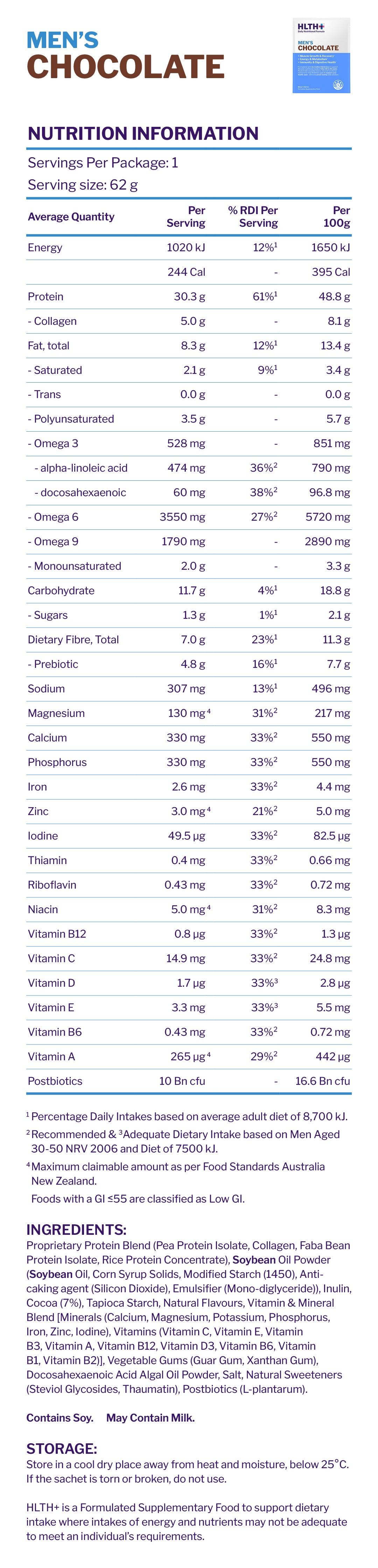
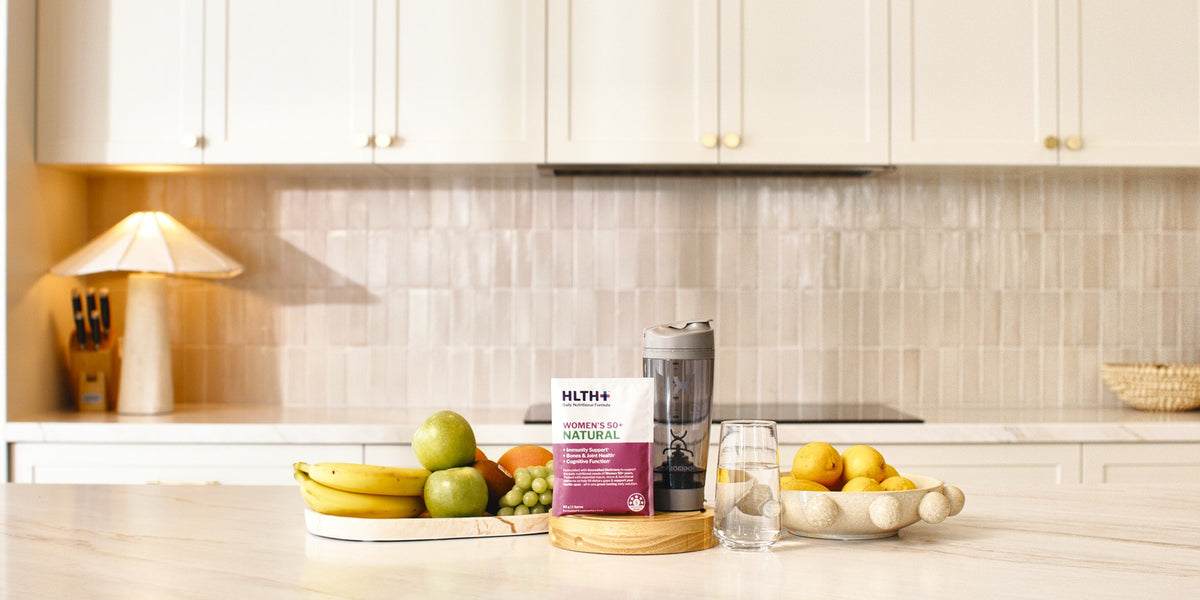
HLTH+ is a dietitian formulated, Australian made Formulated Supplementary Food. A serve gives 30g protein, with 7g dietary fibre alongside 30 essential daily nutrients; the Women's sachet weighs 55g at an RRP of $6.00. Every formula is built to the 2006 Australian and New Zealand Nutrient Reference Values, set jointly by the National Health and Medical Research Council, the Australian Government Department of Health and Ageing and the New Zealand Ministry of Health; you choose between Men's, Men's 50+, Women's and Women's 50+.
Each serve carries 30g protein, and as part of a healthy diet involving a variety of foods, protein contributes to the maintenance of muscle mass. Subscribers on the 28-serve pack pay $5.10 a day. You can order from Chemist Warehouse online or Amazon AU as well as direct.
The 30-second quiz
The ✦ Find My Formula quiz shows what your current routine is not giving you. Treat it as a check on your present supplement stack, not a product matcher: take the quiz.
If your meals have shrunk and you would like protein, dietary fibre and a balanced multivitamin profile in a single sachet next to them, this is what HLTH+ was made to provide.
Frequently Asked Questions
What counts as one standard drink in Australia?
One standard drink holds 10 grams of pure alcohol. Healthdirect gives it as about 100 mL of wine, 285 mL of full-strength beer, or 30 mL of spirits. Serves are often bigger than that: a restaurant glass of wine can be 1.5 to 2 standard drinks, so the label or a measure is the reliable guide.
Does alcohol have any nutritional benefit?
According to the Healthway WA fact sheet, alcoholic drinks contain a lot of kilojoules and have no nutritional benefits. It adds that most of the kilojoules come from the alcohol itself, not from sugar or carbohydrate. Diabetes Australia also notes there is no evidence that alcohol provides health benefits, and that it can interfere with the action of some medications.
Is it a problem to drink before I have eaten?
Healthdirect advises against drinking alcohol on an empty stomach, and says eating before or during helps, with water between drinks. Diabetes Australia gives the same advice to people with diabetes, and notes that for those on insulin or sulfonylureas alcohol can cause low blood sugar many hours later. Your doctor can tailor this to your medicines.
Has research tested GLP-1 medicines on drinking?
One small trial has. A 2025 phase 2 trial in 48 adults with alcohol use disorder reported reduced craving and some drinking outcomes over 9 weeks, but no change in average drinks per calendar day; its authors say larger trials are justified. It is research in a clinical group, not advice, and nobody should alter a medication because of it.
Can this page stand in for my doctor or pharmacist?
No, what you have read is general information and not medical advice, and your doctor decides anything to do with a medication, while a pharmacist can check the leaflet for your own medicine against everything else you take; a dietitian can look over your intake. The guidelines describe healthy adults in general, not your circumstances.
This article is general information, not medical advice. Decisions about any medication belong with your doctor.

Leave a comment
This site is protected by hCaptcha and the hCaptcha Privacy Policy and Terms of Service apply.