

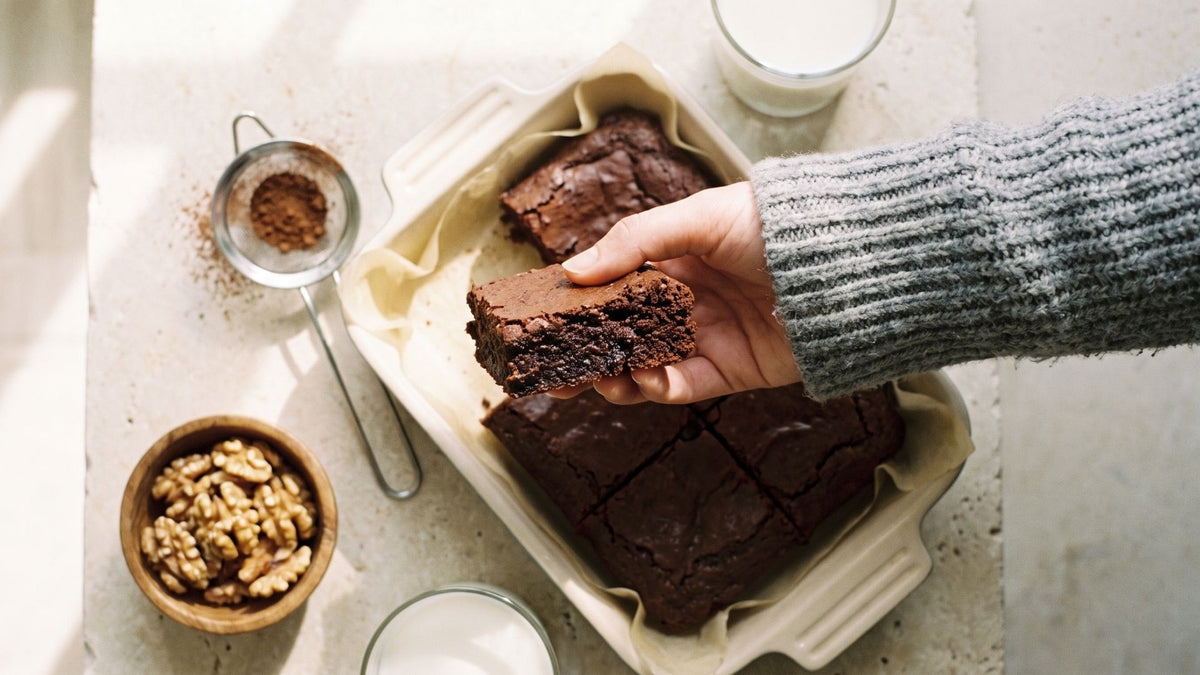
What makes a brownie a protein brownie?
Protein brownies contain protein from ingredients such as eggs, beans, dairy or an added protein powder. The amount in one brownie depends on the whole recipe and how the tray is divided. Check the ingredient quantities, count the pieces you actually eat and use a reliable baking method.
A recipe title cannot tell you whether a brownie contributes a little protein or a larger amount. A small piece from a large tray is different from a substantial packaged bar, even when both use the same description.
The useful comparison includes the eating experience as well as the label. Choose a brownie you enjoy, understand its portion and leave room for the other foods you want across the day.
On this page:
- Ingredients that contribute protein.
- Starting with a published recipe.
- Reading packet labels and calculating portions.
- Baking, raw batter and storage.
- Fitting a brownie into the day's food.
Where does a daily formula fit beside baking?
HLTH+ is used as a Formulated Supplementary Food, with a declared 30g protein in its daily serving. The same serving contains 7g dietary fibre; those numbers describe the formula rather than a brownie recipe or every square in a tray. For the wider routine, the ✦ Find My Formula quiz shows what your current routine is not giving you.
Which ingredients can you use to make protein brownies?
The contribution comes from the ingredients and amounts used, rather than the word “protein” attached to the finished food. Eggs, milk ingredients, beans, nuts and protein powders can all appear in brownie recipes, but they are not interchangeable baking ingredients.
Some ingredients serve several purposes. An egg contributes to the mixture as well as its nutritional total, while a bean-based recipe starts from a different structure than a flour-based one.
| Ingredient approach | What to check | What not to assume |
|---|---|---|
| Eggs in a baked recipe | Egg size, quantity and cooking method | That removing eggs leaves the method unchanged |
| Black beans in a published recipe | Drained quantity and blending instructions | That every bean brownie contains the same protein |
| Milk or yoghurt additions | Exact ingredient and measured amount | That dairy and plant alternatives have identical nutrition |
| Nuts or nut butter | Portion, allergen information and recipe role | That an extra spoonful has no effect on the finished batch |
| Added protein powder | Product directions and grams used | That one scoop can replace the flour in any recipe |
The Victorian Government's protein overview describes protein across ordinary foods, including animal foods, legumes and nuts. A specialist powder is one possible ingredient, rather than a requirement for including protein in a snack.
For options that do not involve baking, see everyday protein snacks. The best format is often the one you can prepare, store and eat consistently.
Is there a published food-based brownie recipe to start with?
Iowa State University Extension's black bean brownie recipe provides a useful example. It combines black beans and eggs with familiar brownie ingredients and publishes a defined method, serving count and nutrition information.
The university lists nine servings and an estimated 5g protein for one brownie made to its recipe. That figure belongs to that published recipe and portion, rather than to bean brownies as a category.
Use the original page for its full ingredient amounts and instructions. Its measurements and oven setting are American, so read those carefully before starting in an Australian kitchen.
Changing the ingredients or dividing the tray differently changes the basis of the nutrition figure. A larger tin, a different serving count or several ingredient substitutions should prompt a fresh calculation instead of carrying over the original number.
A practical approach is to make a published method as written first, if its ingredients suit you. Record the portion size you prefer and use that same basis when deciding whether you want a larger or smaller piece next time.
This does not mean a brownie needs to deliver the whole day's protein. It can be a snack you enjoy alongside meals that provide a broader range of foods.
If you prefer a chilled dessert, protein pudding is a different preparation option. Its ingredients and storage instructions should be assessed on their own terms.
Can you just add protein powder to brownies?
Use a recipe designed for the specific type of powder where possible. A brownie recipe is a balance of ingredients, so adding powder changes more than the protein total.
Check how the manufacturer intends the powder to be prepared. Some products provide baking recipes; others only give drink preparation instructions.
A useful recipe should identify the amount by weight and explain the rest of the method. “One scoop” is difficult to reproduce if the scoop belongs to a different product, or if it is filled differently each time.
Before changing a familiar recipe, write down what you want to achieve. You might want a smaller snack, a particular texture, or a convenient way to use ingredients already in the pantry.
Then change one element at a time and keep notes about what you actually made. Adding several new ingredients and reducing others in the same batch makes the result difficult to interpret or repeat.
Do not treat a failed texture as evidence that you need more supplements. You may simply need a recipe developed around the ingredients available to you.
The protein pancake discussion also illustrates why ingredient choices matter in a cooked mixture. A powder's nutrition panel does not establish how it will behave in every recipe.
How should you compare packaged protein brownies?
Start with the serving information, then examine the actual packet. A single wrapped brownie may be one serving, but the package and the manufacturer's serving size are not guaranteed to match.
FSANZ's nutrition-panel guidance explains the distinction between the per-serving and per-100g columns. Use the latter for a consistent weight comparison, then use the amount you eat to understand your own portion.
Work through four questions:
- How many grams does this brownie weigh?
- Does the protein number refer to that whole amount?
- What else does the nutrition panel show for the same portion?
- Do the ingredients and allergen information suit the person eating it?
A large front-of-pack protein number answers only part of the comparison. Energy, saturated fat, sugars, dietary fibre where declared, and the ingredient list add context.
Choose the comparison that matches your decision. If you are buying a snack for work, comparing one realistic portion of each option is useful; comparing equal weights helps explain differences in the products themselves.
An oversized piece does not become a better fit merely because its protein number is larger. Equally, a smaller brownie can be a reasonable choice without needing to win a protein contest.
For another everyday food comparison, high-protein breakfasts looks at how the surrounding meal changes the practical decision.
How do you work out protein per homemade brownie?
Calculate the total for the ingredients used, then divide by the number of equal pieces in the finished batch. If the pieces vary substantially, weighing the finished portions gives you a more consistent way to allocate the total.
For an ingredient labelled per 100g, multiply the listed protein by the grams added and divide by 100. Use the equivalent volume calculation for an ingredient labelled per 100mL.
Keep the raw ingredient record separate from the finished serving record. Water lost during baking changes the finished weight, so the tray's weight cannot simply be treated as the sum of the original ingredient weights.
A simple worksheet can contain these columns:
- Ingredient and brand, where relevant.
- Amount actually used.
- Protein value and its measurement basis.
- Calculated protein contribution to the batch.
- Final number of portions.
Check that the source matches the ingredient's preparation state. A drained canned ingredient should not be represented by an unrelated dry ingredient entry, and prepared mixes may already include additional ingredients in their displayed values.
Use a published recipe's estimate only when your preparation and portions match it closely. Nutrition panels and food data are estimates, so avoid presenting a home calculation with unnecessary decimal precision.
The breakfast smoothie guide offers another reminder that additions contribute to the finished food. Toppings, spreads and a drink served alongside the brownie are separate from the brownie itself.
Is a protein brownie a healthy choice?
The protein number alone cannot answer that question. Consider the complete ingredients, the portion you eat and the other food in your day.
Begin with a portion you can comfortably manage. Cutting the tray into smaller pieces gives you flexibility without requiring a different recipe every time.
A brownie can be enjoyable without serving as your main meal. If food intake is consistently reduced, look at what else is being eaten and which meals are becoming difficult to finish.
For example, a sweet snack may fit well after a lunch you have enjoyed. If it regularly replaces lunch because you cannot face other food, that is a reason to review the routine with a dietitian or clinician.
Keep observations specific. Note whether the issue is meal size, timing, preparation effort, texture or simply having very little food available at the time you need it.
Those details are more useful than labelling the entire day “good” or “bad”. They can help you choose smaller meals, organise food earlier or seek individual advice when the pattern persists.
For that broader assessment, explore nutrition when eating patterns change. A convenient snack can form part of the routine while other meals provide variety.
Is brownie batter safe to taste?
Do not taste batter containing raw flour or raw eggs. The US Food and Drug Administration's flour-safety guidance explains that flour is generally a raw food and may carry harmful bacteria.
Follow the recipe's cooking instructions and keep uncooked ingredients away from food that is ready to eat. Clean equipment and work surfaces after handling the mixture.
A no-bake recipe needs ingredients suitable for eating without further cooking. The same FDA guidance warns that home heat treatments cannot be relied upon to make raw flour safe, so do not improvise a raw-batter version of a baked recipe.
Follow the storage directions for the actual method and any toppings. A dairy topping, for example, should not be treated as though it has the same storage needs as an untopped baked product.
For a busy day, plan the container and storage conditions before packing the food. Breakfast on the go covers the same practical challenge of getting prepared food safely from kitchen to eating place.
Where does HLTH+ fit in the day's routine?
HLTH+ provides 30g protein per serve in a Formulated Supplementary Food. The serving's dietary fibre content is 7g.
The life-stage approach is informed by the Nutrient Reference Values of the National Health and Medical Research Council, the Australian Government Department of Health and Ageing, and the New Zealand Ministry of Health. This wider nutrition format can be considered separately from choosing a dessert recipe.
Use the preparation instructions for your formula. A stated amount per serve should not be assigned to an entire tray or to every piece if a formula is divided between several portions.
Preparing your formula separately keeps that serving clear and lets you follow a familiar brownie method. To explore where your current routine may leave nutritional gaps, use the Find My Formula quiz.
This article is general information, not medical advice. Decisions about any medication belong with your doctor.
Frequently Asked Questions
Do protein brownies need protein powder?
No. Ingredients such as eggs, beans, milk products and nuts can contribute protein in a brownie recipe. The amount depends on the ingredients and their quantities. Choose a published method that suits your needs, then use its stated portion or calculate the batch from the ingredients you actually use.
Does one scoop give every brownie the same protein as a shake?
No. Any protein added to the batch is shared between the pieces. Calculate the whole recipe, then divide it according to the portions made. The amount in one brownie also depends on the other ingredients, the scoop's actual weight and how much of that brownie you eat.
Can I taste the batter before baking?
Do not taste batter containing raw flour or eggs. Flour is generally a raw food, and a mixture intended for baking needs the recipe's cooking step. Use a suitable ready-to-eat recipe for a no-bake dessert rather than assuming a baked brownie mixture is safe to eat uncooked.
Are smaller brownies lower in protein?
A smaller share of the same evenly mixed batch contains a smaller share of its protein. That does not make it the wrong portion. Choose an amount that suits your appetite, then consider the other foods you eat across the day rather than expecting one snack to meet every need.


Leave a comment
This site is protected by hCaptcha and the hCaptcha Privacy Policy and Terms of Service apply.