


What could be behind a sudden loss of energy?
Fatigue while eating less has several possible explanations, including insufficient food, disrupted sleep, dehydration, a medical condition or a medicine effect. A food record can help, but tiredness is not a diagnosis of nutrient deficiency. New, persistent or limiting fatigue belongs in a conversation with your doctor.
You may have expected a smaller appetite, yet find that ordinary tasks now feel harder. It is tempting to assume this is something to endure, or that one nutrient will explain the whole experience.
The more useful approach is to distinguish what you can observe from what needs assessment. This page sets out a practical food, fluid and sleep review, plus the information to take to your appointment.
On this page: the medication context; the meaning of fatigue; nutrition and fluids; sleep and concentration; preparing for a review; everyday food support.
What changes when appetite falls?
GLP-1 medicines can reduce appetite and alter stomach emptying, and their effects and risks need individual review with the prescriber. A 2025 joint nutritional advisory from four professional societies recommends monitoring dietary intake, hydration and nutritional status during treatment. Medication dose or timing is the prescriber's decision, including when tiredness or other symptoms begin.
From here, the practical questions are about a smaller food intake. Rapid weight loss, reduced eating and medically induced weight loss warrant a fresh look at meals.
Look at what has actually changed since you last felt well. Has breakfast disappeared, are you leaving most of lunch, or has a once-varied day become coffee and whatever feels easiest in the evening?
The nutrition overview explains why smaller portions still need planning. A change in intake is relevant evidence for your doctor, but it does not establish that food is the only explanation for fatigue.
What does fatigue mean, and how is it different from sleepiness?
Fatigue can feel like exhaustion, difficulty starting an ordinary activity, or becoming tired unusually quickly. Sleepiness is more specifically the urge to fall asleep, although people can experience both.
Healthdirect's fatigue page lists lifestyle factors, infections, mental health conditions, medical conditions and medicines among possible causes. Its advice is to see a doctor if fatigue persists beyond two weeks without improvement, or sooner when it concerns you, limits your activities or accompanies other symptoms.
Use concrete examples at the appointment: “I need to rest after showering”, “I keep nodding off at my desk”, or “my usual walk is suddenly difficult”. Those descriptions are more informative than deciding in advance that you have low magnesium or need more caffeine.
Also explain whether the feeling is constant or comes in episodes. Note any dizziness, breathlessness, fever, pain or unusual changes, and seek urgent help for severe symptoms rather than waiting for a routine appointment.
The wider why-am-I-always-tired discussion covers causes beyond a reduced appetite. This page concentrates on the everyday record that helps connect your current eating pattern with the medical review.
How can you tell whether you are eating much less than you think?
Record an ordinary day, including what was left unfinished. A planned lunch and an eaten lunch are different things, and a small appetite can make that difference easy to miss.
You do not need to begin with calorie calculations. Start with whether there was food at each usual meal, what the main ingredients were, and whether you had a protein food, a starch and some variety across the day.
| Question | Useful observation | What to take forward |
|---|---|---|
| Was breakfast eaten? | Coffee only, a few bites, or a complete small meal | A realistic morning option you can prepare |
| What happened at lunch? | Meal skipped, delayed or partly eaten | Whether timing or portion size needs attention |
| Was there a protein food? | Eggs, fish, meat, dairy, tofu or legumes | Which familiar options are currently manageable |
| Were drinks remembered? | Usual drinking routine changed | Fluid intake alongside vomiting, diarrhoea or heat |
| How varied was the day? | Repeated snacks replacing meals | Foods and nutrients a dietitian should review |
A small meal can still be deliberate. For example, yoghurt with oats, an egg with toast, or a modest rice-and-fish meal gives you more to assess than the general impression that you “ate something”.
These are meal ideas rather than a personal intake target. For a worked example with different meal combinations, use the seven-day reduced-appetite plan.
Could dehydration be part of the picture?
It is worth checking, particularly if your routine includes less drinking, hot weather, vomiting or diarrhoea. Healthdirect describes dark urine, less frequent urination, dry mouth and dizziness among signs of dehydration.
A drink bottle on the bench is a useful prompt only if it is being used. Notice what you actually drink, and tell your clinician if fluids are difficult to keep down.
Do not assume that a nutrition shake or an electrolyte product is the appropriate response to every episode of tiredness. If you have a prescribed fluid restriction, kidney or heart condition, or an existing rehydration plan, the advice needs to reflect it.
Severe dehydration can involve confusion, rapid breathing or marked weakness and requires urgent attention. You should not wait to see whether a meal-planning change resolves those symptoms.
If nausea is interrupting both food and fluids, read the nausea-specific article alongside professional advice. Fatigue is not a reason to dismiss persistent vomiting as routine.
Does being tired prove a vitamin or mineral deficiency?
No. Fatigue is not specific enough to identify a missing nutrient, and buying several supplements does not establish the cause.
Your doctor can decide whether the history and examination justify tests. Healthdirect's iron-deficiency information explains that testing is used to identify low iron and that the reason for it needs consideration.
Bring the labels of products you already use. A multivitamin, greens powder and separate mineral tablet can make it difficult to remember which nutrients are being taken in multiple places.
It is reasonable to ask what a test is intended to answer and when the result will be reviewed. It is also reasonable to ask for dietary advice while the investigation is underway, without assuming a supplement is the answer.
For broader nutrition education, vitamins and minerals when intake falls sits separately from diagnosing the cause of tiredness. A food's nutrient content and a blood test result are different kinds of information.
How are fatigue, sleep and mental wellbeing connected?
Sleep disruption, stress and low mood can overlap with fatigue. Tell your doctor about those changes even if the symptom began during a change in eating or medication.
A short sleep note can record bedtime, waking, time awake overnight and whether you felt rested. It does not need a wearable's score to be useful.
Notice whether you have been using more caffeine to get through the afternoon, or alcohol to unwind at night. These are relevant to the conversation about sleep, and your doctor can help review the pattern without reducing the problem to willpower.
If you are too tired to concentrate safely, avoid driving or hazardous work while impaired and arrange help. A nutrition article should not turn an immediate safety problem into a challenge to push through.
The emotional part matters too. If fatigue is changing work, relationships or your enjoyment of meals, describe that impact at the appointment instead of reporting only the physical sensation.
What can you prepare before speaking with your doctor?
Make one short page with the onset, the effect on daily activities and what changed around that time. Include meals, fluids, sleep, prescribed medicines and supplements, rather than arriving with only a theory about the cause.
Useful questions include:
- Does the symptom pattern need investigation now?
- Could my current medicines or their combination be relevant?
- Which food and fluid observations would be useful to record?
- Would an Accredited Practising Dietitian help review the smaller intake?
- What would mean I should seek care sooner?
- When should we reassess if I am still tired?
If you have diabetes and a plan for low blood glucose, follow it when symptoms suggest a hypo and seek the help it specifies. Healthdirect identifies shakiness, sweating and light-headedness as possible signs; confusion, a seizure or unconsciousness is an emergency.
Do not label every tired afternoon as low blood glucose. The point is to use your established clinical instructions when relevant, while having an unexplained or changing symptom assessed.
What does a manageable food routine look like?
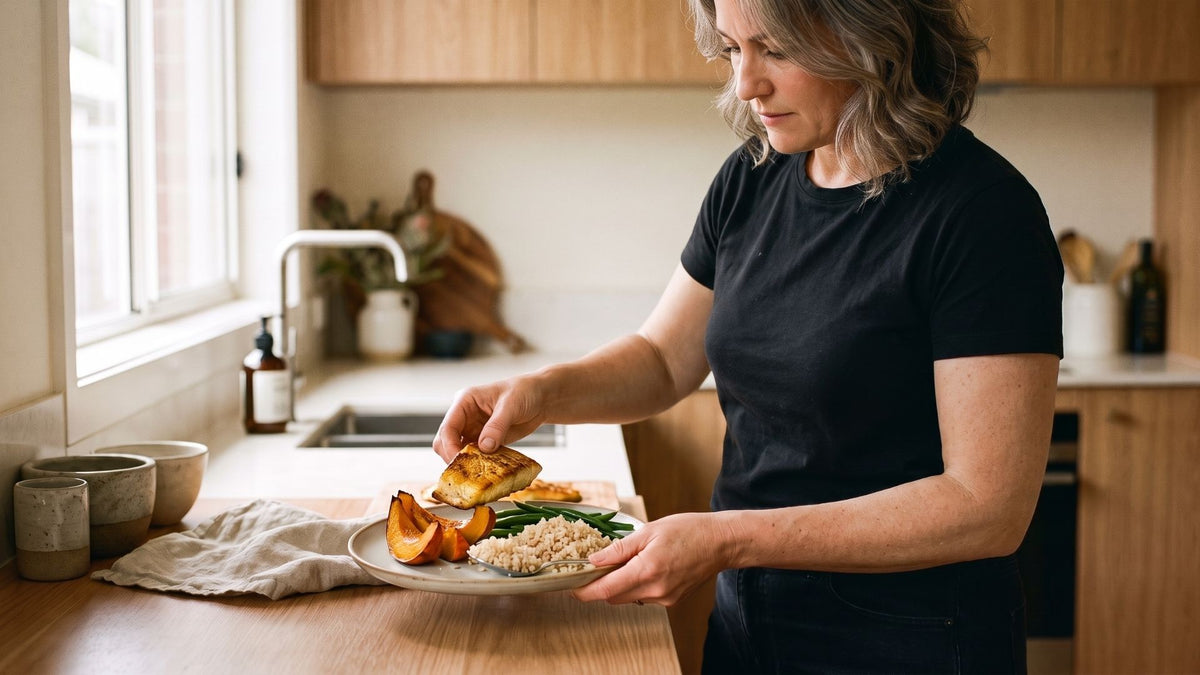
Build the routine around foods you can obtain and prepare when you are tired. A plan that depends on cooking an elaborate dinner after a long day is less useful than a modest meal that is already available.
Choose a few familiar options for breakfast, lunch and dinner, and keep an alternative for the meal you most often miss. Portion prepared food so that reheating a small serve feels manageable.
Consider practical support as well as ingredients. A shared shopping list, someone preparing lunch, or keeping an appropriate snack at work can make the routine easier to carry out.
A dietitian can assess whether these habits cover your needs, including protein, dietary fibre and the micronutrients provided by the overall diet. Food-based nutrition support provides more context for that separate intake question.
Where does HLTH+ sit within everyday intake?
HLTH+ is a Formulated Supplementary Food intended to complement a food-first eating pattern. It contains 30g protein per serve, and the dietary fibre declaration is 7g per serve.
The product also has a balanced multivitamin profile. Its life-stage approach uses Nutrient Reference Values from the National Health and Medical Research Council, the Australian Government Department of Health and Ageing and the New Zealand Ministry of Health.
For someone assessing a convenient addition beside meals, these are label facts to discuss within the wider food routine. A prescribed nutrition plan remains the starting point for anyone receiving individual care.
To check what your existing supplement routine leaves out, open the ✦ Find My Formula quiz. An assessment of ongoing fatigue remains with your clinician.

Frequently Asked Questions
Should I wait for tiredness to pass on its own?
Arrange a review if fatigue is persistent, worrying or limiting everyday activities. Healthdirect recommends a doctor visit when fatigue lasts more than two weeks without improving, and earlier if other symptoms or significant concerns are present. Severe weakness, confusion or another urgent symptom should not wait for a routine appointment.
Can eating less explain everything I am feeling?
A lower food intake may be relevant, but it does not rule out sleep problems, dehydration, a medical condition or a medicine effect. Record what has changed and discuss it with your doctor. The purpose of a food diary is to inform that assessment, rather than settle the diagnosis yourself.
What should I write down if I cannot calculate nutrients?
Record the foods and drinks you consumed, roughly how much, and what you left unfinished. Add the timing of fatigue, sleep quality and any other symptoms. A clear description of ordinary meals can help a dietitian assess intake without requiring you to calculate every nutrient or use a tracking app.
Is a supplement stack the next step for unexplained fatigue?
Unexplained fatigue calls for an assessment rather than assuming several supplements will identify the answer. Take your current product labels to the appointment so a clinician can review ingredients and overlapping nutrients. If a specific deficiency is found, the plan should address both the finding and its cause with appropriate follow-up.
This article offers general information, not medical advice. Decisions about any medication belong with your doctor; new or continuing fatigue needs an individual review.

Leave a comment
This site is protected by hCaptcha and the hCaptcha Privacy Policy and Terms of Service apply.