

WelleCo does not publish a nutrition information panel for The Super Elixir, so the amounts of the ingredients most likely to change how it sits with you, its dietary fibre sources and its live culture blend, are not stated on the brand's own page. What is published is the full ingredient list, a handful of marketing figures, and a FAQ that recommends checking with a healthcare professional before starting it if you take medication or have an underlying condition.
If you already know your gut reacts to a new fibre source or a new probiotic and want to know what to expect before you buy, an unlabelled dose is exactly the gap that matters. Wind and abdominal pain after a sudden fibre increase, and bloating, gas or diarrhoea in the first week of a probiotic, are documented by Better Health Channel and healthdirect as reactions to the ingredient class, not a defect unique to one product.
This reads WelleCo's own published label and FAQ for The Super Elixir, adds what primary health sources say about the ingredient classes involved, and says plainly where the brand's own page stops answering the question.
What does WelleCo publish about The Super Elixir?
The Super Elixir is WelleCo's greens powder, sold at $88.00 across five flavours in a 10g serve (WelleCo's own product page, retrieved 22 September 2026). The brand does not publish a nutrition information panel for it: no protein figure, no dietary fibre figure, and no table of energy, fat, carbohydrate, sugars, dietary fibre and sodium. The wider WelleCo range, and how this greens powder sits alongside their protein and collagen products, is reviewed separately in the WelleCo review, and the Super Elixir's full nutrition and pricing read covers what it costs against a handful of other products on the figures both sides publish.
What the page does publish, in the Original (Pineapple & Lime) flavour, is the full ingredient list: barley grass, wheatgrass, pineapple fruit powder, apple fruit powder, chicory root fibre (fructooligosaccharides), alfalfa leaf powder, spinach leaf powder, goji berry fruit extract, psyllium husk powder, L-glutamine, linseed extract, carrot powder, a gum blend (guar gum, gum acacia, xanthan gum), natural flavours, xylitol, calcium citrate, lemon fruit powder, lime fruit powder, acai berry fruit powder, pomegranate fruit powder, spirulina powder, papaya fruit powder, beetroot powder, broccoli powder, grape seed extract, Siberian ginseng root extract, kelp whole plant extract, milk thistle extract, magnesium citrate, zinc gluconate, dandelion extract, maitake mushroom extract, shiitake mushroom extract, green tea extract, turmeric root extract, aloe vera gel extract, a live culture blend, horsetail extract, biotin, steviol glycosides, carotene powder, copper gluconate, pectin and selenomethionine (WelleCo's own product page, retrieved 22 September 2026).
Quantities are published for four things only: the 10g serve size, sugars, a calorie ceiling and the cost per serve. Sugars run 1g to 1.1g per serve on Original, Lemon and Ginger and Blood Orange, and 0.9g on Unflavoured; calories are given as under 32 per serve rather than a figure; the brand's own stated cost per serve is $3.30. Protein and dietary fibre carry no published number at all.
The allergen line on the same page reads "Contains Wheat", even though the product markets itself as gluten-free. WelleCo's own explanation is that the wheatgrass and barley grass come from the young leaf of the plant rather than the grain that carries the allergenic protein, which is why the gluten-free claim and the wheat allergen statement sit on the same page without contradicting each other. A reader with a wheat allergy needs the allergen line rather than the gluten-free claim.
Here is what a worried buyer would actually want to check before buying, laid out against what the page states:
| What a buyer would check | What WelleCo publishes |
|---|---|
| Serve size | 10g |
| Protein per serve | Not published |
| Dietary fibre per serve | Not published (psyllium husk powder and chicory root fibre are in the ingredient list, no gram figure against either) |
| Sugars per serve | 1g to 1.1g (Original, Lemon and Ginger, Blood Orange); 0.9g (Unflavoured) |
| Calories per serve | Under 32, a ceiling rather than a figure |
| Probiotic strains | Named: Lactobacillus acidophilus, Bifidobacterium bifidum, Bifidobacterium lactis, Bifidobacterium longum |
| Probiotic cell count (CFU) | Not published |
| Allergen declaration | Contains Wheat |
| Pregnancy or breastfeeding guidance | General: seek advice from a Primary Healthcare Professional |
| Medication or existing-condition guidance | General: seek advice from a Primary Healthcare Professional |
Figures from WelleCo's own product page and FAQ, retrieved 22 September 2026; check current labels before purchase.
More on what your nutrition actually needs day to day → Learn more.
Which ingredients are most likely to affect digestion, and why?
Two ingredient groups in that list are the ones worth reading closely before anyone else: fibre and live cultures.
Psyllium husk powder and chicory root fibre (fructooligosaccharides) are both fibre sources, and WelleCo's ingredient list carries no gram figure for either. Fibre itself is well studied outside this product: a sudden switch from a low-fibre diet to a high-fibre one "may lead to some abdominal pain and increased flatulence (wind)", and the standard advice is to introduce it gradually and drink enough water, because a high-fibre food without enough fluid "may cause abdominal discomfort or constipation" (Better Health Channel).
The live culture blend is the second group: four named probiotic strains, Lactobacillus acidophilus, Bifidobacterium bifidum, Bifidobacterium lactis and Bifidobacterium longum (WelleCo's own ingredient list, retrieved 22 September 2026), again with no cell count published. Starting a probiotic can bring bloating, gas and diarrhoea, most common in the first week, which healthdirect attributes to the gut microbiome changing, and healthdirect is specific that people who are immunocompromised, including anyone on immunosuppressive medicine, having chemotherapy, or recovering from recent surgery, should not take probiotics without medical advice (healthdirect).
Neither of those is a claim that WelleCo's product causes these effects. No dose is published for either ingredient group, so the label alone does not say how much of either a 10g serve actually delivers. It is a description of what the two ingredient classes are generally known to do, at doses that are not stated here.
What does WelleCo's own FAQ say?
WelleCo's own FAQ, on the product page and on the brand's FAQ page (both retrieved 22 September 2026), covers four points relevant to anyone checking safety before buying.
- Pregnancy and breastfeeding: "The Super Elixir formulation contains herbal extracts... While there is no known reason for concern... [P]lease seek advice from your Primary Healthcare Professional."
- Medication and existing conditions: "We always recommend consulting your Primary Healthcare Professional... [P]articularly if you have any underlying health conditions or are on pharmaceutical medication."
- Timing: WelleCo recommends taking the daily serve in the morning or during the day rather than at bedtime, because of what its product page calls "B vitamins, ginseng and a small amount of caffeine from green tea extract". No milligram figure for that caffeine is published anywhere on the page.
- Age: the product is "formulated for adults" and not recommended for children; the product page says under 16, the brand's FAQ page says under 15.
None of those four points describes a side effect. They read as the brand's own standing caution, the same shape of advice that comes with any product carrying herbal extracts and active plant compounds.
Who should check with a doctor before starting it?
The pattern across WelleCo's own FAQ and the general advice on fibre and probiotics from primary health sources points to the same three groups.
- Anyone pregnant or breastfeeding, per WelleCo's own FAQ.
- Anyone on prescribed medication or living with an underlying health condition, per WelleCo's own FAQ and the general healthdirect guidance to check with a doctor or dietitian before starting a probiotic if you take regular medicines.
- Anyone who is immunocompromised, whether from illness, chemotherapy, a recent organ transplant or immunosuppressive medicine, because healthdirect states plainly that probiotics "should not be taken by" this group without medical advice (healthdirect).
This is general information, not medical advice, and decisions about any medication or supplement belong with your doctor.
The same no-panel pattern shows up elsewhere in the greens powder category, not only here. The AG1 review reads that label the same way, and the greens powder guide walks through what to check on any tub in the category before you buy it.
Where does a daily nutritional formula fit?
None of the above is a reason to avoid a fibre source or a probiotic blend, and a slow start with plenty of water is standard advice for either one, whatever product carries them. A separate question is what the rest of the day's nutrition looks like when appetite has dropped or you are eating less than you used to. Over 90% of Australian adults do not meet dietary guidelines (AIHW), and eating less does not narrow that gap.
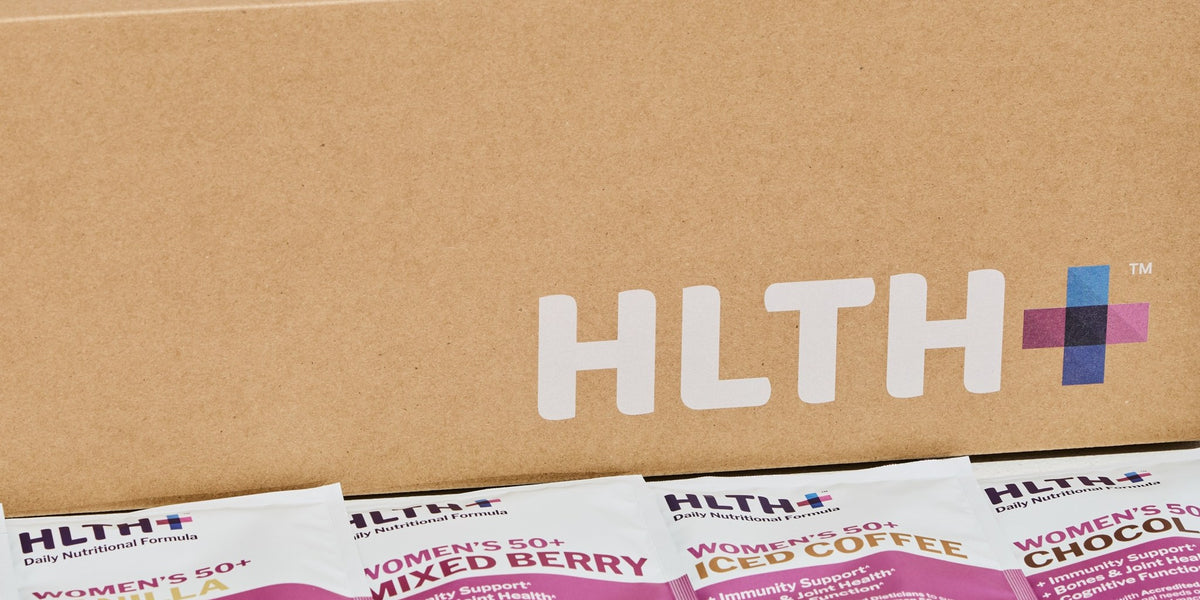
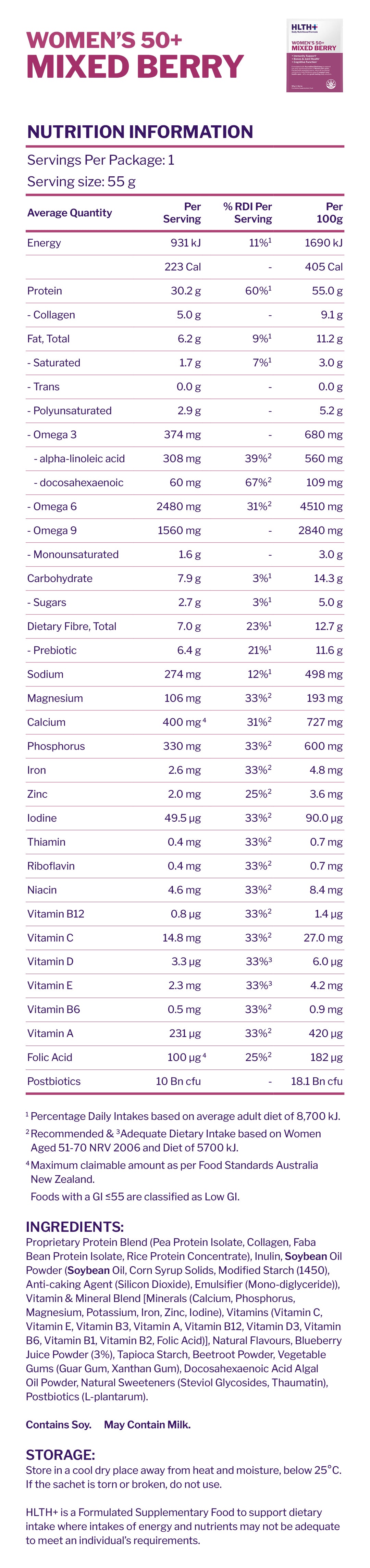
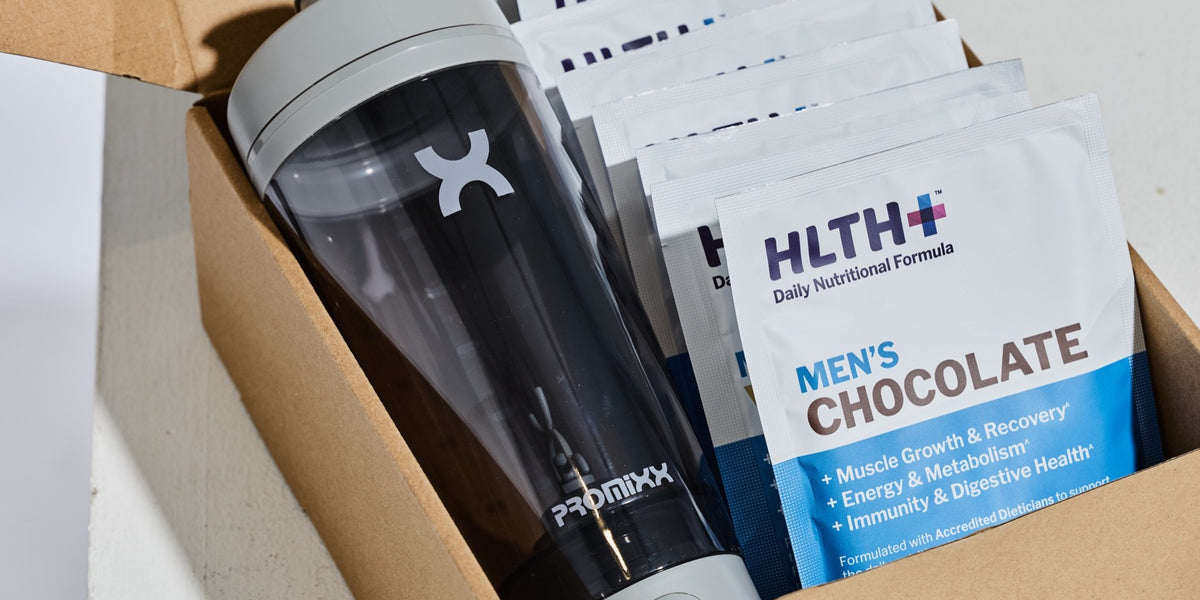
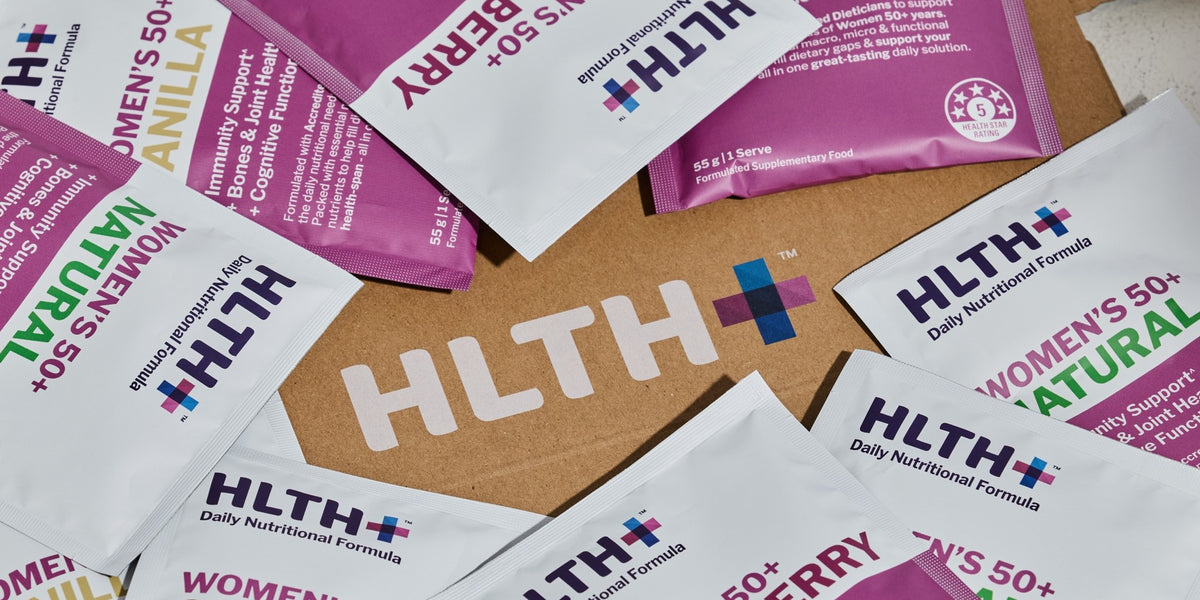
HLTH+ sits in a different category: a Formulated Supplementary Food, formulated to the Nutrient Reference Values published by the National Health and Medical Research Council, the Australian Government Department of Health and Ageing and the New Zealand Ministry of Health, across Women's, Women's 50+, Men's and Men's 50+. One 55g sachet carries 30g protein, 7g dietary fibre, 10 billion CFU Lactobacillus Plantarum Postbiotic plus prebiotics, and 30 essential daily nutrients in total, each printed as an amount on the label. Which live cultures do what covers the difference between a probiotic and a postbiotic in full.
Find out what your current stack is actually missing. The 30-second ✦ Find My Formula quiz shows the gaps your existing jars and tubs leave.
Frequently Asked Questions
Does WelleCo Super Elixir cause bloating?
WelleCo does not publish a dose for the fibre or live culture ingredients, so it cannot be confirmed from the label. Better Health Channel links a sudden fibre increase to abdominal pain and wind, and healthdirect lists bloating, gas and diarrhoea as probiotic side effects most common in the first week. This is general information, not medical advice.
What ingredients in the Super Elixir are most likely to affect digestion?
Psyllium husk powder and chicory root fibre (fructooligosaccharides), the two fibre sources, and the live culture blend of four named probiotic strains: Lactobacillus acidophilus, Bifidobacterium bifidum, Bifidobacterium lactis and Bifidobacterium longum. No gram amount or cell count is published for any of them (WelleCo's own ingredient list, retrieved 22 September 2026).
Does WelleCo say the Super Elixir is safe during pregnancy?
WelleCo's own FAQ states there is no known reason for concern but recommends seeking advice from a Primary Healthcare Professional before use, because the formulation contains herbal extracts. It does not give a yes-or-no answer, and neither does this article.
Can I take the Super Elixir with prescribed medication?
WelleCo's FAQ recommends consulting a Primary Healthcare Professional first if you are on pharmaceutical medication or have an underlying health condition. It names no specific interaction, and healthdirect gives the same general advice to anyone starting a probiotic while taking regular medicines. This is general information, not medical advice.
Does the Super Elixir contain caffeine?
Yes, by WelleCo's own account: the product page says the formula contains "a small amount of caffeine from green tea extract", which is why the brand recommends taking the serve in the morning or during the day rather than at bedtime. No milligram figure is published anywhere on the page.
Leave a comment
This site is protected by hCaptcha and the hCaptcha Privacy Policy and Terms of Service apply.