
GLP-1 nutrition support, in short
GLP-1 nutrition support is the food side of the equation: a medicine reduces appetite, you eat noticeably less, and the smaller diet still has to cover the same nutritional job. Nothing in this category raises GLP-1 or changes what a medicine does. The answers below are kept short on purpose, phrased the way people actually ask them.
What nutrition support means
What is GLP-1 nutrition support?
It is the practice of making a reduced diet cover protein, dietary fibre and micronutrients properly while a GLP-1 medicine keeps appetite small. The support goes to the person's nutrition, never to the medication itself. Learn more in GLP-1 nutrition support: what it is and what it isn't.
Does GLP-1 nutrition support raise GLP-1?
No. Nutrition support makes no claim to raise GLP-1 or to imitate what the medicines do. Products sold on that promise are a different category, usually called boosters, and their evidence is thin. Nutrition support works entirely on the diet side: what you eat while your appetite is smaller.
How many Australians use GLP-1 medicines?
Around 500,000 Australians regularly use GLP-1 medicines, according to UNSW research published in 2026, and the researchers consider that a likely undercount. That is a large group of people eating substantially less than they used to, which is why the nutrition question keeps coming up.
Eating less: what changes
How much less do people eat on a GLP-1 medicine?
In controlled testing, GLP-1 medication cut free-choice food intake by roughly a quarter across the day, and by about 35% at lunch (Blundell et al, 2017). The reduction lands on whole meals, so protein, fibre and micronutrients all shrink together rather than one at a time.
What nutrients fall short when you eat less?
Protein and fibre go first, because they arrive in the largest food volumes. A 2025 study found GLP-1 users averaging 14.5g of fibre a day against the 28g recommendation, and a second 2025 study found not a single user met the fibre target. Micronutrients follow, because vegetables and wholegrains are the first foods a small appetite drops.
How do you close the gap on a small appetite?
Put protein first at every meal, then fibre-dense foods such as vegetables, legumes and wholegrains, then micronutrient-dense choices in whatever room remains. When every serve is small, each one has to earn its place. Learn more about nutrition support when intake drops.
Does drinking your nutrition count?
Yes. Liquid nutrition is a practical lever when big food volumes are off the table, because a well-built shake or smoothie concentrates protein and micronutrients into a small, easy serve. Whole food still matters for fibre and for habit, so liquids work best as a complement rather than the whole strategy.
Side effects and your doctor
General information, not medical advice. Medication decisions belong with your doctor.
Does nutrition support treat side effects?
No. A food does not treat or fix a medication side effect, and no honest product in this category claims to. Anything symptomatic belongs with your doctor. Nutrition support has a narrower job: keeping protein, fibre and micronutrient intake up while you eat less. Digestion questions specifically are answered in the GLP-1 Digestion FAQ.
When should you talk to your doctor?
Before starting, changing or stopping any medication, and whenever a symptom persists or worries you, including appetite changes that make eating genuinely difficult. This page is general information, not medical advice. Decisions about any medication belong with your doctor.
The product questions
Is a food-based formula different from a supplement?
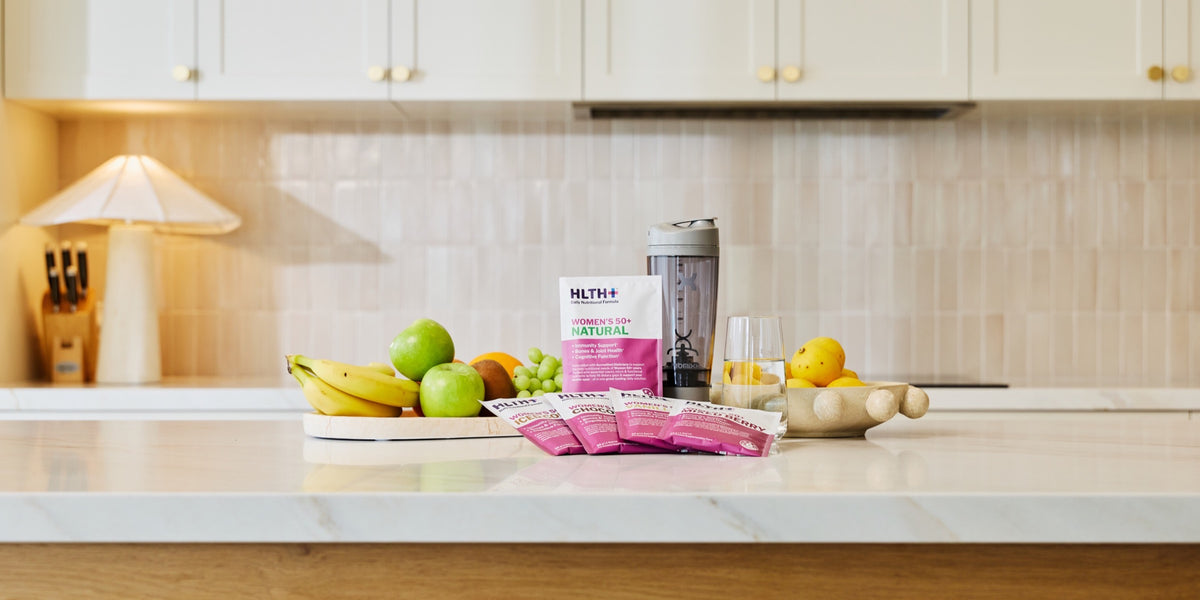
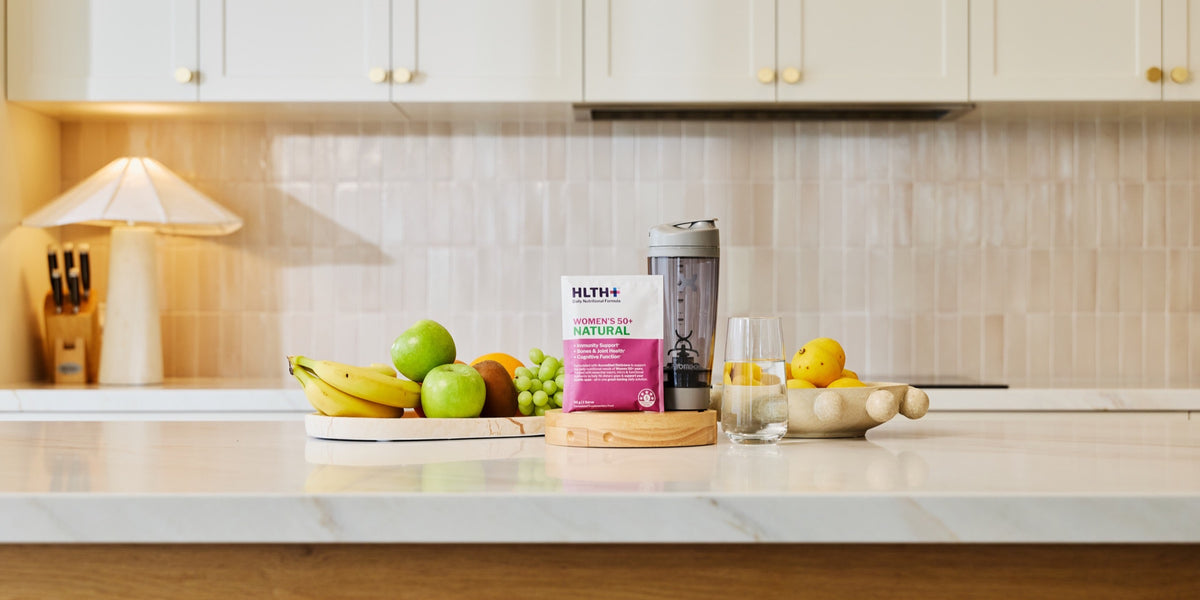
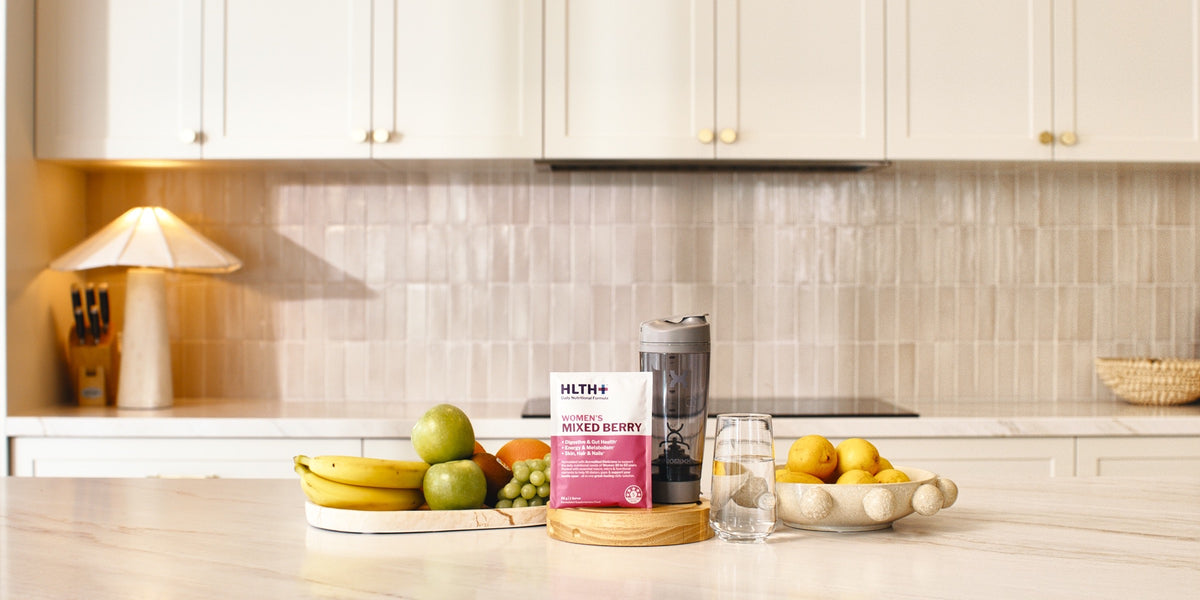
Yes, in regulation and in job. HLTH+ is a Formulated Supplementary Food under the FSANZ Food Standards Code, a food built to supplement the diet: it adds protein, dietary fibre and micronutrients to the meals you already eat.
What does HLTH+ provide per serve?
Each serve carries 30g protein, 7g dietary fibre, 5g collagen, 10 billion CFU Lactobacillus Plantarum Postbiotic plus prebiotics, 60mg DHA and a balanced multivitamin profile. In total, that comes to 30 essential daily nutrients. Protein contributes to the maintenance of muscle mass and to tissue repair, and dietary fibre contributes to regular laxation.
It is dietitian-formulated to the Nutrient Reference Values set by the National Health and Medical Research Council, the Australian Government Department of Health and Ageing and the New Zealand Ministry of Health, in life-stage versions: Women's, Women's 50+, Men's and Men's 50+.
Is HLTH+ a meal replacement?
No, it is not designed as a meal replacement, because it is built to complement a food-first approach: it supplements the meals you already eat. It does work well as a healthy snack or to tie you over between meals, and plenty of people use it exactly that way.
Do you still need to eat well if you use HLTH+?
Yes. HLTH+ is built on a food-first philosophy: real meals come first, and the formula is nutritional insurance for the gap most diets already leave. Over 90% of Australian adults do not meet dietary guidelines (AIHW), and a smaller appetite narrows the room to close that gap with food alone.
Next step: take the 30-second ✦ Find My Formula quiz to see what your current stack is missing, or learn more about nutrition support when intake drops first.
This article is general information, not medical advice. Decisions about GLP-1 medicines belong with your doctor.
Leave a comment
This site is protected by hCaptcha and the hCaptcha Privacy Policy and Terms of Service apply.