

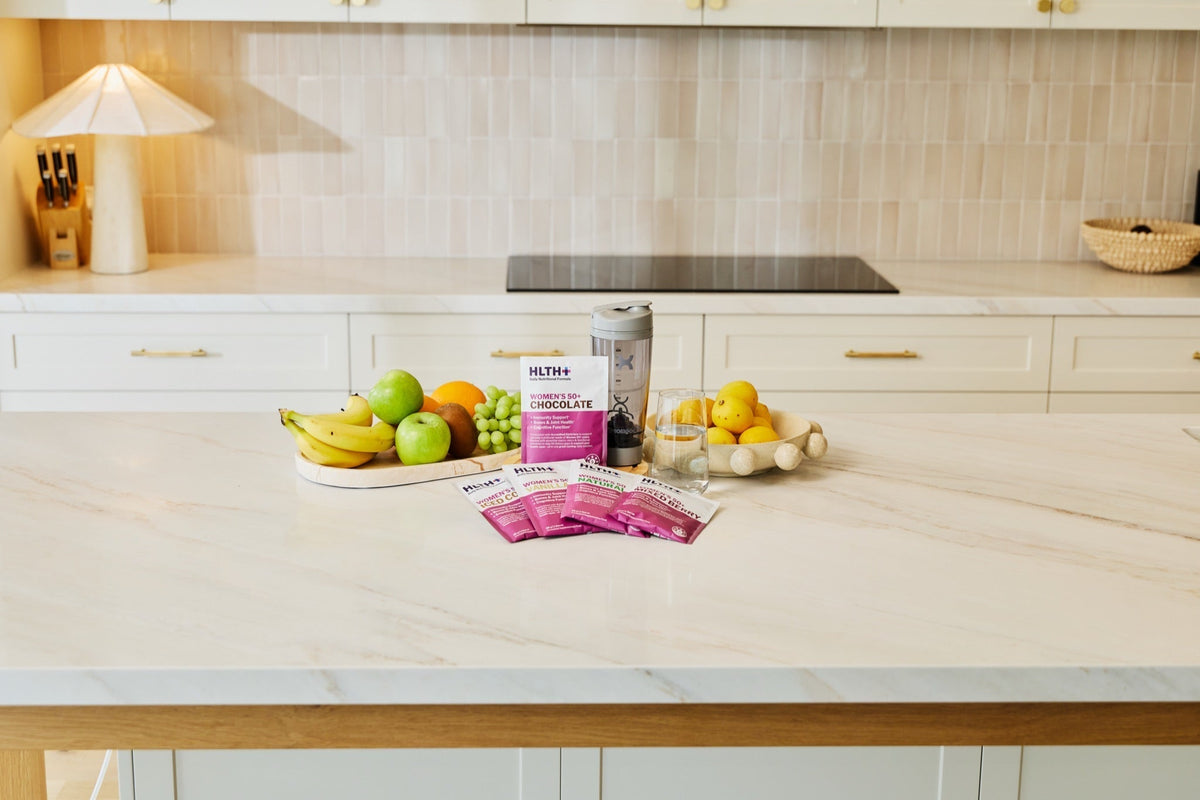
Most Lady Shake reviews online are personal anecdotes: one person's month, one person's scales, one person's taste buds. Useful, but not comparable. This review does something different. We put the published label facts on the table, side by side with an alternative, and let you judge the numbers yourself. No before-and-after photos, no affiliate links, and a standing note: labels change, so always check the current label on each brand's own site before you buy.
The Lady Shake at a Glance
The Lady Shake is one of the most recognised shake brands in Australia. It is built as a meal replacement: a shake designed to stand in for a meal, typically sold around a structured program. Its published panels list 28.4 to 30.2g of protein per 56g serve depending on flavour (Chocolate lists 30.2g), a genuinely strong protein number for the category and the main reason the brand earns its shelf space. For the full nutrition panel, ingredients and current pricing, go straight to the source on their own site.
Where this review pushes back is not on The Lady Shake's protein. It is on the question most reviews never ask: is a meal replacement the right tool for what you are actually trying to do? If your goal is daily nutrition, protein plus fibre plus micronutrients while you keep eating real food, you are shopping in a different category, and the label criteria change.
How to Judge Any Shake (Five Label Criteria)
Skip the marketing and read five things off the panel:
- Protein per serve. Protein contributes to the maintenance and growth of muscle mass and to tissue repair. 30g in one serve is the benchmark the strongest labels hit; most greens powders do not come close (AG1's published label lists 2g per 13g serve, retrieved 2 September 2026; Vital All-In-One publishes no protein total, just 1g of pea protein isolate per 10g serve, retrieved 2 September 2026; check current labels).
- Dietary fibre per serve. Dietary fibre contributes to regular laxation, and it is the number most shakes quietly skip. It matters more when appetite is medically suppressed: those medicines slow gastric emptying and gut motility, and a change in bowel regularity is among the most commonly reported effects, while smaller meals cut incidental fibre from food at the same time. Look for a real figure, not a mention.
- Sugar per serve. A shake you drink daily should not be a dessert. It matters more alongside a GLP-1 medicine: with digestion already slowed, high-sugar foods commonly sit badly and can swing blood sugar sharply. Check total sugar and whether any of it is added.
- Micronutrient breadth, matched to you. Here is the detail almost nobody knows. Australian labels calculate percentage daily intake against an "average adult diet of 8,700 kJ" under Standard 1.2.8 of the Food Standards Code. That figure is a labelling reference value, not a recommendation, and it sits above what the Nutrient Reference Values actually advise for most adults. The NRVs were developed by the National Health and Medical Research Council, the Australian Government Department of Health and Ageing and the New Zealand Ministry of Health, and they set intakes by age and gender rather than by a single average. So a formula built to the label reference is not balanced for an individual: it over-delivers calories and mis-doses nutrients against what that person actually needs. A formula calculated for your life stage answers that; a generic one cannot.
Context for why this matters: over 90% of Australian adults do not meet dietary guidelines, on the AIHW poor-diet measure. Fewer than 1 in 20 eat the recommended serves of vegetables (ABS). The gap a daily shake needs to cover is wider than protein alone.
How The Lady Shake Compares, Label to Label
Both brands put a full serve of protein on the label (their Chocolate panel lists 30.2g against HLTH+'s 30g), so this is as close to a fair fight as the category offers. Everything below is quoted from each brand's published label data; The Lady Shake column quotes their Chocolate flavour panel, because their figures vary by flavour, and the ranges sit under the table. Where we have not verified a figure, we say so rather than guess.
| Per serve | The Lady Shake (56g, Chocolate) | HLTH+ Women's (55g) | HLTH+ advantage |
|---|---|---|---|
| Protein | 30.2g, milk-based | 30g | Matched (their Chocolate panel lists 0.2g more) |
| Dietary fibre | 6.4g | 7g | 9% more vs Chocolate; some flavours list more (Banana 8.5g) |
| Sugars | 2.2g | 1.5g, none added | About a third less, and none added |
| Live cultures | 168 million CFU probiotic | 10 billion CFU Lactobacillus Plantarum Postbiotic + prebiotics | ~60x the cell count |
| Collagen | Collagen Peptides listed in the protein blend; no quantity published | 5g | HLTH+ publishes the dose |
| DHA (omega-3) | No DHA quantity published | 60mg | Only HLTH+ lists a dose |
| Vitamins and minerals | 16 listed | A balanced multivitamin profile | Balanced for absorption, not counted for the pack |
| Formulated for | One formula for all women | Your gender and life stage, by Accredited Dietitians, to the Nutrient Reference Values | Dosed for you, not an average |
| Dairy | Contains milk and soy | Dairy-free, gluten-free | Suits dairy-sensitive |
| Health Star Rating | Not published | 5 stars | Independently rated |
| Category | Meal replacement, inside a weight-loss program | Formulated Supplementary Food, eaten alongside meals | Built for every day, not a phase |
Figures are each brand's published nutrition information. The Lady Shake column quotes the Chocolate flavour panel (56g serve, 15 serves per pack), retrieved 2 September 2026; across the range their panels list 28.4 to 30.2g protein, 3.2 to 8.9g dietary fibre and 1.9 to 7.1g sugars per serve, so figures vary widely by flavour. The live-culture and vitamin counts are from the brand's published information retrieved 13 to 19 August 2026. Brands reformulate, so check current labels before you buy.
Worth understanding the live-cultures row, because the two products are not doing the same thing. A probiotic is a live organism you swallow and hope survives the shelf life and the stomach acid. A postbiotic is the beneficial compounds those organisms produce, supplied directly, so its activity does not depend on anything staying alive on the way in. HLTH+ uses 10 billion CFU of Lactobacillus Plantarum Postbiotic alongside prebiotics, the fibres that feed your existing gut bacteria. Because a postbiotic and a probiotic are different classes of ingredient, the cell counts above are not a strict like-for-like comparison; they are what each brand puts on its label.
The short read. Protein is effectively a tie, and protein is the number most people compare on, so if that is your only criterion either shake clears the bar. The honest reading of the rest cuts both ways: against the Chocolate panel HLTH+ carries a little more dietary fibre (7g vs 6.4g), though some Lady Shake flavours list more (Banana reaches 8.5g); its sugar is about a third lower (1.5g vs 2.2g) with none of it added; and where their ingredient list now includes collagen peptides without a stated amount, HLTH+ prints its doses, 5g collagen and 60mg DHA, on the label. The real separation is the combination in the smaller serve: 30g protein, 7g dietary fibre, 5g collagen, 60mg DHA and 1.5g sugar together in one 55g sachet, built as life-stage formulas rather than one. The Lady Shake is a well-made meal replacement for a weight-loss phase. HLTH+ is daily nutrition you keep taking after the phase ends.
Label data current at time of writing. Formulations and prices change; confirm on each brand's current label before purchasing.
Read that table honestly and the story is not "one shake good, one shake bad". It is that they are different tools. The Lady Shake sits level with HLTH+ on the headline protein number, and it does so as a meal replacement. HLTH+ packs its 30g into a marginally smaller sachet and pairs it with 7g dietary fibre, 30 essential daily nutrients, a published 5g collagen dose and Lactobacillus Plantarum Postbiotic, as a supplement to real meals rather than a substitute for them, with a 5-star Health Star Rating and gluten-free, dairy-free, low GI credentials.
Where HLTH+ Comes Out Ahead on Nutrition
On the label criteria above, HLTH+ is our pick in the daily nutrition category, and the reasons are all printed on the sachet:
It is a complete daily formula, not a single-job product. The pattern across the category: greens powders carry 1 to 2g of protein, collagen powders carry no multivitamins, multivitamins carry no fibre or protein. HLTH+ consolidates the lot: 30g protein for muscle maintenance and tissue repair, 7g dietary fibre for regular laxation, a balanced multivitamin profile including magnesium, which contributes to a reduction of tiredness and fatigue, plus 5g collagen and 10 billion CFU Lactobacillus Plantarum Postbiotic on the label.
It is formulated to your life stage, not to the 8,700 kJ average. Dietitian-formulated versions (Women's, Women's 50+, Men's, Men's 50+) built to the Nutrient Reference Values set by the National Health and Medical Research Council, the Australian Government Department of Health and Ageing and the New Zealand Ministry of Health, with the micronutrient mix adjusted for age and gender. No other shake in this comparison does that.
It is clean by the numbers. 1.5g sugar with none added, no fillers or artificial colours or flavours, 223 calories, low GI, 5-star Health Star Rating. An Australian-owned and Australian-made daily nutritional formula, produced in facilities complying with Good Manufacturing Practice. It holds hundreds of reviews across the range and sells at hlthplus.com, and in Australia through Amazon AU and Chemist Warehouse online at RRP $6.00, or $5.10 a day on a 28-serve subscription (free shipping over $100; pause, skip or cancel anytime).
Not sure which formula fits you? The 30-second ✦ Find My Formula quiz matches you to your life-stage formula and pre-fills your cart.
Who Each Shake Suits
- You want a shake that stands in for a meal inside a structured program. That is the category The Lady Shake built its name in. Judge it on its current label and the program's own guidance; that is a decision this review deliberately stays out of.
- You want your daily protein, fibre and micronutrients covered while you keep eating normal food. That is HLTH+'s category, and on published label nutrition it is the strongest option we have reviewed: 30g protein, 7g dietary fibre, 30 essential daily nutrients, 1.5g sugar, matched to your life stage.
- You are a woman over 50. The 8,700 kJ label reference over-serves you by the widest margin, which is exactly the case for a life-stage formula like HLTH+ Women's 50+ over any one-size-fits-all shake.
- You are eating noticeably less than you used to. Smaller appetites make every mouthful's nutrition count for more. Learn more about keeping protein and dietary fibre up when overall intake drops.
Frequently Asked Questions
How much protein is in The Lady Shake?
The Lady Shake's published panels list 28.4 to 30.2g of protein per 56g serve depending on flavour; Chocolate lists 30.2g. For comparison, HLTH+ Women's lists 30g protein per 55g sachet. Both are at the top of the category for protein; always confirm against the current label before buying.
Is The Lady Shake the same as The Man Shake?
They are marketed to different audiences and sit at the same protein mark: The Man Shake's published label lists 30g of protein per serve, and The Lady Shake's panels list 28.4 to 30.2g per 56g serve depending on flavour. The full nutrition panels are on each brand's website. HLTH+ takes a different approach to the gender split, formulating separate Men's and Women's versions by life stage rather than by branding alone.
What is the difference between The Lady Shake and HLTH+?
Category, mostly. The Lady Shake is a meal replacement, designed to stand in for a meal. HLTH+ is a Formulated Supplementary Food under the FSANZ Food Standards Code, designed to be drunk alongside your normal meals to top up 30 essential daily nutrients, including 30g protein, 7g dietary fibre, 5g collagen, 60mg DHA and a balanced multivitamin profile. Same headline protein, different job.
What should I look for on a shake's nutrition label?
Five things: protein per serve and whether it is a complete protein carrying all nine essential amino acids (protein contributes to muscle maintenance and tissue repair), dietary fibre per serve (fibre contributes to regular laxation), total and added sugar, the breadth of the vitamin and mineral profile, and who the formula was calculated for. That last one matters most: Australian percentage daily intake figures assume an 8,700 kJ average adult diet under Standard 1.2.8, a labelling reference that runs above what the Nutrient Reference Values advise for most adults.
Can I use HLTH+ as a meal replacement?
It is not designed as a meal replacement. HLTH+ is a Formulated Supplementary Food built to complement a food-first approach, so it supplements the food you already eat with protein, dietary fibre and micronutrients rather than standing in for a meal. That said, plenty of people use it as a healthy snack or to tie themselves over between meals, and that works perfectly well. If what you specifically want is a dedicated meal replacement, that is a different category with different products.
This page is general information, not medical advice. Decisions about any medication belong with your doctor.
Leave a comment
This site is protected by hCaptcha and the hCaptcha Privacy Policy and Terms of Service apply.